Almost all of this music is still unavailable on services like Spotify and Pandora, and much of it is simply not available commercially at all. But a few of the bands (like Marina Swingers and the Deadbeats) have reformed or created websites where their music can be purchased. My next post will be a series of links to these sites. In the meantime, enjoy!
 |
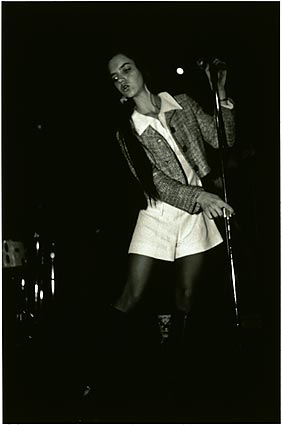
| Su Tissue, Suburban Lawns (Photo: Bruce Kalberg) |
1 Wild Kingdom — Roma / Destiny (1981) 5:51
2 Abecedarians — Benway’s Carnival (1985) 5:09
3 Suburban Lawns — Janitor (1981) 2:31
4 Zolar X — Science (1982) 1:25
5 B People — Can Can’t (1981) 2:27
6 Life After Death — In Living Color (1985) 1:54
7 Christian Death — When I Was Bed (1985) 7:57
8 Beat-E-O’s — China Sleeping (1981) 2:12
9 Wet Picnic — He Believes (1982) 5:33
10 Dogma Probe — Thirteen (1982) 4:30
11 Iron Curtain / Steven Fields — Legalize Heroin (1988) 5:07
12 Null And Void — The Motorcycle Song (1982) 2:27
13 Savage Republic — Next To Nothing (1982) 3:24
14 Human Hands — Blue Eel (1981) 2:51
15 Gleaming Spires — While We Can (1982) 4:19
16 Nu Beams — One Step For What? (1981) 3:09
17 Abecedarians — I Glide (1986) 7:31
18 Standard Of Living — So Hard (1982) 1:53
19 Rich and Famous — Neutron Star (1978) 4:05
20 Monitor — BEAK (1979) 1:50
21 Fibonaccis — Some Men (1987) 2:42
22 Freshly Wrapped Candies — Judas (1987) 3:41
23 Green on Red — Two Bibles (1981) 3:29
24 League of Nations — Thin Ice (1984) 3:42
25 Atila — Mr. Kritik (1981) 1:12
26 Outer Circle — Another Moon (1982) 3:25
27 Rand Kennedy — Enorma Jones (1983) 1:03
28 Animal Dance — Under Pulse (1984) 3:21
29 Steaming Coils — Singing Notice (1991) 3:12
30 Geza X And The Mommymen — The Paranoids Are Coming (1982) 3:11
31 Null And Void — A Party Filled With Thieves (1982) 3:33
32 Rikk Agnew — 10 (1982) 2:58
33 Trotsky Icepick — Mar Vista Bus Stop (1988) 3:03
34 IQ Zero — Zero Gravity (1981) 3:09
35 Perfect Imperfect Circular — From The Ocean Above (1986) 4:09
36 The Plugz — Touch For Cash (1981) 2:40
37 The Screamers — 122 Hours of Fear (1978) 3:32
38 Deadbeats — Brainless (1979) 2:31
39 Fourwaycross — Apologize (1985) 4:18
40 Cindy Lee Berryhill — Headin’ For The Border Line (1987) 3:56
41 The Weirdos — Helium Bar (1980) 3:22
42 Jobriath — Heartbeat (1974) 2:45
43 Kommunity FK — Incompatible Disposition (1983) 2:48
44 Drowning Pool — Festival of Healing (1987) 2:56
45 Peter Ivers — Sweet Enemy (1974) 2:46
46 17 Pygmies — Suit Of Nails (1985) 3:35
 |
| Jack Brewer and Joe Baiza, Saccharine Trust (Photo: Victor Sedillo) |
Disk 3
47 Phranc — One O’ The Girls (1985) 4:58
48 The Cramps — Green Fuz (1981) 2:08
49 Pop Art — Never No (1987) 2:31
50 Moebius — Video Soldier in a Radio War (1982) 4:26
51 Party Boys — I Love You (1986) 3:22
52 Johanna Went — Slave Beyond The Grave (1981) 2:50
53 Marina Swingers — Little Swine (1979) 2:57
54 Eddie & The Subtitles — Magic (1981) 3:53
56 Autumnfair — Arterial (1986) 3:09
57 The Untouchables — Lovers Again (1985) 3:27
58 Vidiots — Laurie’s Lament (1981) 1:41
59 Slow Children — Spring in Fialta (1981) 3:24
60 The Salvation Army — Happen Happened (1981) 3:02
61 The Nerves — Hanging On The Telephone (1976) 2:05
62 What Is This — Days Of Reflection (1984) 3:42
63 The Dickies — Attack of the Mole Men (1979) 3:41
64 Zoogz Rift — The Great Apes Ate Grapes (1979) 2:34
65 Marnie Sounds — Coquette, Circus Girl (1991) 5:48
66 The Quick — My Purgatory Years (1976) 5:17
67 Le Forte Four — The Lowest Form Of Music (1980) 3:09
68 X — Adult Books (1981) 3:19
69 The Brainiacs — Stunned (1979) 2:33
70 Boyd Rice — Untitled (1977) 1:40
71 Opal — Happy Nightmare Baby (1987) 2:57
72 Pat Smear — Golden Boys (1987) 3:20
73 Redd Kross — Love Is You (1987) 2:29
74 Descendents — Impressions (1987) 3:08
75 Twisted Roots — The Yellow One (1981) 3:03
76 Nip Drivers — Cindy (1984) 1:34
77 Jimmy Smack — Untitled (1982) 1:27
78 Vivabeat — Man From China (1979) 5:23
79 Cindy & the Gidget Haters — Pogoin’s For Me (1980) 2:18
80 T.S.O.L. — Soft Focus (1982) 3:33
81 Christian Lunch — Strangling Of a Small Dog (1981) 1:43
82 Black Randy and the Metrosquad — I Slept in an Arcade (1980) 2:30
83 The Skoings — Do The Orbit (1977) 3:23
84 20/20 — Yellow Pills (1979) 4:17
85 Visiting Kids — Trilobytes (1989) 3:21
86 Fender Buddies — Dancing a Frenzy (1980) 1:48
87 Red Hot Chili Peppers — Why Don’t You Love Me (1984) 3:23
88 Germs — No God (1993) 1:54
89 The Motels — Art Fails (1981) 2:58
90 The Bangles — Going Down to Liverpool (1984) 3:43
91 The Toons — Video Games (1982) 2:46
92 5uu’s — The Birth Of Compromisation (1985) 3:02
93 Minutemen — The Anchor (1983) 2:34
94 A Produce — Pulse (1988) 4:00
95 Urinals — Surfin’ With The Shah (1979) 2:42
 |
| Jimmy Smack (Photographer Unknown) |
96 Che Blammo — Stupid for Your Love (1981) 3:07
97 Hundredth Monkey — Mute Lament (1986) 4:50
98 Bad Religion — Chasing the Wild Goose (1983) 2:50
99 100 Flowers — All Sexed Up (1983) 2:43
100 God And The State — My Name Is Mud (1985) 2:42
101 Hilary — Goose Step, Two Step (1983) 3:37
102 The Romans — Big Neck (1983) 1:46
103 Nick Paine — Solid State (1985) 3:23
104 Afterimage — Strange Confession (1984) 2:47
105 Mystic Knights of the Oingo Boingo — Forbidden Zone (1980) 2:52
106 The Alley Cats — King Of The Street Fights (1981) 3:43
107 Thelonious Monster — I Live In A Nice House (1992) 3:47
108 fIREHOSE — Brave Captain (1986) 3:15
109 Magnolia Thunderpussy — Circle (1985) 4:33
110 Concrete Blonde — Tomorrow, Wendy (1990) 5:09
111 The Rub — Death of Pop (1987) 2:46
112 Gone Fishin’ — Too Many Eyes (1986) 3:11
113 The Wake — Forever’s Fair (1985) 3:38
114 Ethyl Meatplow — Silly Dawg (1990) 3:37
115 Bone Cabal — I O Betulah (1983) 4:34
116 Dos — Taking Away The Fire (1986) 4:15
117 Food And Shelter — Nun With A Gun (1984) 3:18
118 The Kipper Kids — Sheik of Araby (1983) 4:28
119 Flesh Eaters — See You In The Boneyard (1981) 3:30
120 Rain Parade — This Can’t Be Today (1983) 4:35
121 Alfalfa — Jewels (1985) 3:09
122 Mark Lane — Pushing and Pulling (1981) 3:15
123 Holly Beth Vincent — Honalu (1982) 3:49
124 Earle Mankey — Mau Mau (1980) 3:18
125 Q — Sushi (1982) 2:02
126 Tyrants in Therapy — In the Shadow of Hitler (1984) 2:31
127 Saccharine Trust — Drugstore Logic (1986) 2:28
128 B People — Give Up (1980) 2:02
129 White Glove Test — Peter (1986) 3:04
130 All — Alfredo’s (1988) 3:52
131 Mumbles — Diamond (1990) 4:09
132 Red Temple Spirits — Soft Machine (1989) 4:02
133 Crimony — Vampire Party (1988) 2:37
134 Plebs — Redhead (1982) 1:44
135 Failsafe — 1943 (In Germany) (1984) 3:33
136 Susan Rhee and the Orientals — There’s Something In The Air (1983) 4:32
137 Zimbo Chimps — Inca Vacation (1985) 5:21
138 Swamp Zombies — We Just Don’t Belong (1989) 4:14
139 The Unknowns — The Streets (1982) 2:42
 |
| The Plugz (Photographer Unknown) |
140 Francis X and the Bushmen — Grey Talk (1987) 4:15
141 Peace Corpse — Mental Malady (1986) 3:12
142 Pilgrim State — Deathwish (1983) 3:24
143 Ten Foot Faces — Get Out of That Tree (1986) 2:23
144 Gary Valentine — The Ballad Of Nathaniel West (1979) 4:01
145 Gothic Hut — Undermatter (1988) 5:37
146 Christian Lunch — This Media Sucks! (1990) 4:30
147 Blackbird — More (1987) 5:09
148 Frank Zappa — Duke of Prunes (1979) 4:20
149 Wall Of Voodoo — Longarm (1980) 3:46
150 Kommunity FK — No Fear (1983) 5:13
151 Departmentstore Santas — Kaleidoscope (1984) 2:49
152 3D Picnic — Murdermaid (1991) 3:03
153 Friends of Ghosts — Juju Digby Juju (1986) 3:57
154 Iron Curtain — The Burning (1987) 5:01
155 The Last — You (1989) 4:47
156 The Bullets — That Certain Glow (1987) 3:48
157 This Ascension — Alex Kidd (1989) 3:55
158 The Rub — Who Killed Bob Crane? (1987) 3:35
159 Extremes — Animals Part III 1 (1979) 3:32
160 Alisa — I Want To Be a Prostitute (1982) 2:38
161 Marty Gras and the Flamingos — New Clothes Part 1 (1981) 3:21
162 Death Ride 69 — Elvis Christ (1988) 4:49
163 The Middle Class — A Blueprint for Joy (1980) 2:27
164 Sparks — Angst In My Pants (1982) 3:28
165 Flash Bouyancy — Do The Ray (1980) 2:42
166 Suburban Lawns — Hug You (1983) 4:49
167 The Jetzons — 4/3/2001 (1982) 4:18
168 Fishbone — Slick Nick, You Devil You (1987) 4:44
169 D.O.M.E.S. — It’s Too Bad, Mother Dear (1985) 3:44
170 Kim Fowley — 1980 – Run For Your Life (1979) 3:12
171 Caterwaul — Not Today (1988) 4:01
172 Deception Bay — All My Future (1991) 4:50
173 Cathedral of Tears — She Won’t Talk (1983) 3:58
174 Paul Collins’ Beat — You and I (1979) 2:49
175 T.S.O.L. — Silent Scream (1981) 2:46
176 Mnemonic Devices — Marriage Of Convenience (1982) 3:42
177 Artistic Decline — Andy Warhol (1983) 1:43
178 Gary Panter & Jay Cotton — Artist’s Hymn (1989) 2:11
179 Mark Lane — Love Is So Aggravating (1981) 2:34
180 The Egyptian Lover — I Cry (Night After Night) (1984) 5:04
 |
| The Screamers (Photographer Unknown) |
181 Motor Totemist Guild — Get Angry (1984) 2:43
182 Black Flag — Its All Up To You (1985) 5:20
183 Claude Coma And The I.V’s — Minimum Wage (1982) 2:41
184 Bulimia Banquet — Satan’s Doorstep (1986) 2:24
185 Battery Farley — Dress For Obscurity (1985) 3:39
186 Corpus Delicti — No Conflict (1984) 2:56
187 Shadow Minstrels — Popular Song Of The Hour (1983) 4:23
188 Dennis Cooper — Seven Poets Chosen By John Ashbery (1983) 2:18
189 L7 — Snake Handler (1988) 2:29
190 Los Illegals — Guinea Pigs (1983) 4:45
191 Danny & the Doorknobs — In Exile (1985) 2:40
192 Christian Death — Romeo’s Distress (1982) 3:15
193 Red Wedding — Drums (1982) 3:47
194 Subjects — Augie (1982) 2:36
195 Steaming Coils — Diamond Pillow (1987) 3:43
196 Agent Orange — Blood Stains (1980) 1:46
197 The Squad — Scene Of The Crime (1981) 2:36
198 Dark Arts — Rivers (1986) 4:59
199 The Death Folk — Hobos (1989) 3:36
200 Doubting Thomas — Helen Keller (1987) 2:50
201 L.A. Burgers — Color Eyes (1980) 3:03
202 45 Grave — Riboflavin-Flavored, Non-Carbonated, Polyunsaturated Blood (1980) 2:38
203 White Glove Test — Dream #10 (1986) 3:41
204 Great City — Night Flight to Tangiers (1986) 5:05205 The Toasters — Teenage Tease (1980) 3:59
206 Irritators — Whack the Dolphin (1981) 4:20
207 The Middle Class — Out Of Vogue (1978) 1:07
208 Arrow Book Club — Get Down Part 4 (1980) 1:33
209 Oingo Boingo — Only A Lad (1979) 4:16
210 The Unknowns — Not My Memory (1981) 2:21
211 Paul Roessler — Dull Dreary World (1983) 3:29
212 Infantry — The Call (1987) 3:50
213 Zoogz Rift — The Breather (1986) 4:22
214 Legal Weapon — Too High (1985) 4:14
215 Savage Republic — Mobilization (1982) 3:21
216 Peer Group — I Saw That Movie (1981) 1:07
217 Choir Invisible — Hands of Another (1981) 3:49
218 Lotus Lame And The Lame Flames — Bad Sex (1983) 3:40
219 The Go-Go’s — Lust To Love (1981) 3:28
220 Ex-Voto — The Devil’s Work (1990) 4:11
221 John Trubee — Blind Man’s Penis (1976) 1:41
222 The Brat — The Wolf (1980) 3:30
223 Pat Smear — Sahara Hotel (1987) 5:24
224 Peter Ivers and David Lynch — In Heaven (1977) 1:46225 Nip Drivers — You Need Us (2000) 1:10
226 X — I Must Not Think Bad Thoughts (1983) 4:15