Here’s a crazy little video I made with Sianne Ngai back in the salad days of the mid-90s. Special guest appearance (actually, she’s probably the star) by Chelsea Pennebaker.

I won’t tell you the story because it’s so complex that it would take up several pages of this blog, not to mention the technical details — camera, lighting, special effects — since it’s really chock full of them, and I don’t want to waste your time. Screenplay took about 6 months. Quite simply, it’s the best thing since Jean Vigo’s “L’ Atalante.”

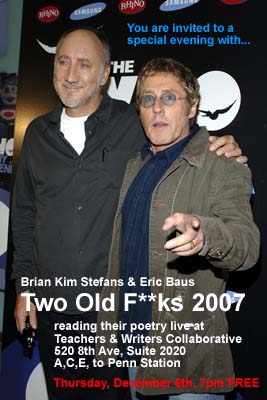
stefans baus poster.jpg

Thursday, December 6th 7pm FREE
Teachers & Writers Collaborative
520 8th Ave, Suite 2020
A,C,E, to Penn Station

wine, cheese reception to follow

Brian Kim Stefans’ recent books of poetry are Kluge: A Meditation (Roof Books) and What Is Said to the Poet Concerning Flowers (Factory School). A book of interviews and criticism, Before Starting Over, was published by Salt Book in 2006. He teaches new media studies at the Richard Stockton College of New Jersey and lives in Philadelphia, PA.

Eric Baus is the author of The To Sound (Wave Books), Tuned Droves (Octopus Books, forthcoming), and several chapbooks. He is a contributing editor for PENNsound and publishes Minus House chapbooks. He lives in Denver.

Mobile Libris will be selling books.

“Hope I die before I get there!” — Pete Townshend.


I got caught up in a lulu.com fever a couple of years ago and started creating this book, which collects my collaborations with Sianne Ngai, Judith Goldman and Jeff Derksen among others, and contains a lot of poems that I never put in my books, occsionally because they just “didn’t fit,” but also because I either forgot about them or didn’t like them at the time, though like them now.

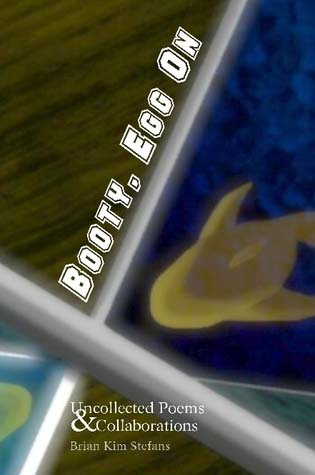
It’s been for sale at Lulu for a few months now but I’ve held off telling anyone about it, but I’ve read from the book at a few readings over the past month and people have been asking about it. So here it is. I’m pretty happy with it — have finally stopped tweakng the shit out of it — and I really like the cover, which features a painting by a Stockton student named Mike Bruno.

The back cover features Charlotte Rampling in a still from “Zardoz,” with the words “It’s Not Time” floating over her — that was the original title of the book, but it’s now just the title of the second section, of “early poems.”

Other features of the book: more translations from Rimbaud, as well as Apollinaire, Jules Laforgue, Emile Nelligan, Guido Gozzano and Virgil; another short play I wrote called “Being John Malkovich”; some more crazy computer-assisted gobbledy-gook; a series of sound translations of Rilke’s “Sonnets to Orpheus”; my one and only collaboration with my little sister, Cindy; leftover visual poems from my first book, Free Space Comix as well as the visual poems that have been on ubu.com for nearly a decade (with a few more that don’t appear there); two New York School sestinas and other brands of Ashberian ooze; more stuff in the style of “Les Assis” from my last book; etc.

Pasted below the blurb from the site is the acknowledgements page so you can see where this stuff comes from. Not all of the poems I’ve published appear in it — I tried to keep the quality high and threw away a ton of garbage, just for you. Some of the really old poems have actually only appeared recently in print because they give me that old Language tingling sensation in my toes.

booty_cover.jpg

“Booty, Egg On” includes poetry mostly from the nineties, as well as translations of Virgil, Rimbaud, Guido Gozzano, Apollinaire, Jules LaForgue and Emile Nelligan. Collaborators include Judith Goldman (the Haki Pok poems), Jeff Derksen (“Mao’s Gift to Nixon”), Stephen Rodefer, Sianne Ngai (“The Cosmopolitans”) and the poet’s sister Cindy Stefans. Poems have previously appeared in Chain, The Impercipient, dANDelion, Callaloo, Drunken Boat, Premonitions, Interlope and the Asian Pacific America Journal among other places. Previous books by Brian Kim Stefans include Kluge: A Meditation (Roof, 2007), What Is Said to the Poet Concerning Flowers (Factory School, 2006), Before Starting Over: Essays and Interviews (Salt Publishing, 2006) and Fashionable Noise: On Digital Poetics (Atelos, 2003). He runs www.arras.net, devoted to new media poetry and poetics, and his blog is Free Space Comix, at www.arras.net/fscIII. 

http://www.lulu.com/content/921396 

PREVIOUS APPEARANCES OF SOME OF THESE POEMS:
Arras: “The Golden Age of Swimwear,” “At the Entrance of the Arbor”
Asian Pacific American Journal: “Author Photo,” “Calypso”
Bard Papers: “Houseboat”
Callaloo: “Fact’s Bird,” “A Bronx Tambourine”
Chain: “Folk Music,” “Heritage”
dANDelion: “Mao’s Gift to Nixon”
Drunken Boat: “Countering the Luddite Itch with a Tin Switch,” “Dailies,” “Jim Jarmusch”
First Intensity: “The Storm,” “Free to be Yu and Mee,” “Poem 33”
580 Split: “Cheqw!,” “The Royal Life (As Told To…)”
Hodos: “A Dream of Winter,” “Poem, ‘As'”
The Impercipient: “Poem (Thank the gales…),” “Poem (Now…),” “Scattered Norm”
Interlope: “The Cosmopolitans”
Itsynccast “Angeles”
Jacket: “The Apple Generation,” “Pastoral Disposal”
Model Homes: “Before Odilon Redon,” “Postlude: the appropriation of peach,” “The Streets of Baghdad”
Mora: “Wednesday’s Children”
Object: “Thermosaging Wayne”
Ocho: “White Sestina,” “Complaint of Pierrot”
Poetic Inhalation: “Very Light and Sweet”
Premonitions: The Kaya Anthology of Asian American Poetry: “Astoria”
Read me: “Frances Chung’s Booklist”
Trowel: “from The Aeneid”
Ubu: Visual Poems
We 19: “Mutter Tongue (To Hearing),” “Thugs”

“Mon Canard” appeared in Stephen Rodefer’s book of poems Mon Canard (the Figures, 2000). A later version of “Mao’s Gift to Nixon” appeared in Jeff Derksen’s book of poems Transnational Muscle Cars (Talonbooks, 2003). A shorter version of “Booty, Egg On” is available for free download on the website ubu.com.

Life just isn’t fun without new posters to design. Here’s one for a project I’m starting at Stockton.

overdrive poster small.jpg

[This from Steve Zultanski]

Just letting you know that on Nov. 3 in NYC there’s going to be a great reading to launch the first issue of President’s Choice magazine. 

The readers:

Rodrigo Toscano
Kim Rosenfield
Kareem Estefan
Brian Kim Stefans
Robert Fitterman
Lawrence Giffin
 
& possible extra-special guests
Brad Flis
Marie Buck
Myself (???)

All appearing at:

The 169 Bar (169 East Broadway) in Manhattan,
on Saturday, Nov. 3, from 5:30 – 8

The cost is a whopping $5 (five dollars).

Hope to see each and every one of you there.

In the meantime, President’s Choice is still available right here:
http://www.presidentschoice.blogspot.com/

03departed2.jpg

+

Sadakichi.jpg

=

avatar.jpg

Which is to say, how I ended up looking like a cross between Leonardo DiCaprio and Sadakichi Hartmann in my avatar for The Godfather video game is beyond me.


Useful things I have done this morning:

  • ordered a sexy brand new Olivetti MS25 manual typewriter (very exciting)
  • went through pile of boring mail
  • bought a can of Chock Full O’ Nuts heavenly coffee
  • brewed coffee (yum)
  • reviewed, once again, local catteries that have available Sphynx kittens
  • emptied the dehumidifier in the basement
  • bought first ever, rather anemic Sunday edition of Philadelphia Inquirer (yet unread)
  • put up Flickr photos of my new house

It’s this last item that prompts the present blog entry. I really don’t think this is all that interesting, but blog posts have been few and far between, and my house is my life for the moment. I tried to make the comments entertaining.

1240515921_366d6fa160.jpg

1241385324_1bc86afe79.jpg

One of the handful of young artists who really inspired me back when I was still haunting the streets of New York was Jeremy Blake, who died this July.

I think I first heard about him through Lytle Shaw, who is much more on the scene than I am (or was). I know that the first piece I saw of Blake’s was at a group show — a single panel video on a huge, wide flatscreen that moved very slowly and could have been mistaken for some terribly gaudy if baroque piece of teak furniture collecting dust in the corner, though opening and closing its doors as if by a poltergeist. It was the most beautiful thing there — a fetish object that was really just a television set — and I was intrigued.

The second was at the Whitney Biennial around the same time. This one involved three flatscreens, two on one wall, one on the other, and resembled a very slow moving anime film, but without any characters (we call them “figures”). There seemed to be some story being told between the three uncoordinated panels having to do with trains, mysterious doors (like the numbered doors on the Price is Right) and toxic gasses that killed off entire (unseen) populations. The colors were bright, sharp, almost fluorescent, the mood haunting and apocalyptic. I spent a lot of time gazing at this one, wondering how the three panels interacted, trying to suss out the narrative if any, confused about whether the images were digitally created or drawn with pastels, and really wondering if I was seeing a brand new form of art being born.

[Addendum: I remembered last night, just before falling asleep — fittingly — that I had seen a Blake piece even earlier at P.S. 1 in a basement room with my friend Melanie Rios. It was a single screen projection, and involved a section that seemed to be snowflakes falling, followed by sections of colored boxes fading into place. We sat and stared at it for a long time, really not knowing what we were witnessing or why it was so engaging. I remember thinking it was trivial at first, a little too passive, but it managed to be kind of aggressively controlling as well. Anyway, you’ll notice I have no memories for the names of these projects, I’m bad with that — I just hope my descriptions are accurate.]

Blake “started as a painter” — such a cliche these days to “sex up” the resume of a digital artist, but in his case very relevant given his prodigious visual vocabulary — but his work eventually ended up in a space all his own between photography, illustration and film (surely some of the slowest moving cinema since Warhol, possibly the slowest moving animation ever, and moving in the opposite direction from many videographers after they get their hands on Final Cut).

Blake might be best known to the world as the person who did the transition scenes for the movie Punch Drunk Love with Adam Sandler and Emily Watson. Another flirtation with pop success was being asked to do a video for Beck:

What is really strange (and I won’t dwell on it, there are obituaries all over the web) is how he died. After his partner, the new media artist Theresa Duncan, died on July 10 — some suspect a suicide, though she overdosed on Tylenol PM and bourbon, which seems an odd choice for me — Blake simply walked into the ocean and drowned. This is from Wikipedia:

On July 17, 2007, Blake was reported missing off New York’s Rockaway Beach. According to news accounts, a woman called 911 to report that she saw a man swimming out to sea. Blake’s clothes and wallet were reportedly found under the boardwalk at Rockaway’s 122nd Street Beach, along with a suicide note that referred to Duncan.

On the morning of Sunday, July 22, 2007, a body thought to be that of Jeremy Blake was discovered 4.5 miles off the coast of Sea Girt, New Jersey (which is 35 miles south of Rockaway Beach). Police announced on July 31, 2007 that they had identified his body.

In addition, both Duncan and Blake had thought they were being pursued and harassed and by Scientologists — Beck is a Scientologist, and both thought Blake had somehow troubled the waters enough to get them on the Scientologist black list, like an informal Jihad of some nature. Of course, the Scientologists deny any such thing, but Blake had prepared a 27-page “chronicle” in preparation for a lawsuit that he was planning to file, so he clearly took it quite seriously — it was no passing paranoia, and they both shared this fear. Blake had just gotten a hot job at Rockstar Games — maker of the Grand Theft Auto video game series — so he was hardly down on his luck. The couple had just moved back to New York from Los Angeles.

In any case, I was really hurt by the news of his death. I really felt that he was part of “my generation” and someone whose work I could look forward to for many years in the future as a sort of guide, someone to goad me on by producing work I could only struggle to understand. Another artist I really admire, even cling to in a way, is Paul Chan, and both Blake and Chan are similar in that they conceived — and coolly, charismatically completed — ambitious digital art projects that really go against the grain of what it means to do “digital” work.

That is. both artists choose craft over pressing all the buttons and rushing a work out to the periphery of the technologically possible, and prefer conceptual simplicity and meditative registers over intellectual showboating and machismo, and yet neither are less than provocative and have some complex “message” to convey. Some of Chan’s most impressive Flash work uses only black and white pseudo-silhouette images — the only video art I’ve seen in Philadelphia was a Chan piece that depicts figures of all natures falling either downward or upward like a nightmare from 9/11, projected diagonally across a floor — or images based on the drawings of Henry Darger and the writing of Fourier.

The Beck video is not really representative of Blake’s work, at least not the stuff I’ve seen, and I think the inclusion of Beck’s face in the video was probably a record company decision (like the overlays of Morrissey’s face on the original “Ask” video, directed by Derek Jarman). It does share with his other work the basic premise of long, slow fades between colorful images with certain colors lingering longer than others so that, between images, a sort of “interstitial” composite is created. It takes the idea of the afterimage on the retina — stare at something red long enough and you’ll see blue — and makes it tactile, forcing a different state of perception on the viewer, slowed by the pace yet never at rest.

By the way, do any of you thirty-somethings remember the first version of the video for U2’s “One,” created by David Wojnarowicz? It was rejected by the record company as too uncommercial after appearing on MTV for about a week — there was a world premiere and everything. It was finally pulled and replaced by two other versions, one a bleeding-heart-Bono quickie like every other U2 video, and another directed by the celebrity photographer Anton Corbijn of the band in drag (probably a result of bad conscience, as Wojnarowicz died of AIDS soon after the first video premiered). Since I’m high on the YouTube stuff recently, here’s the original “Buffalo” version of “One,” AIDS allegory and all:

I found that Derek Jarman Smiths video on YouTube as well… oh the glory. The video was made spontaneously by Jarman, who is best known for the punk rock movie Jubilee and who eventually also died of AIDS. When the record company decided to use his film for promotion, they demanded Morrissey’s face appear at regular intervals to keep the kiddies engaged:

In any case, check out Jeremy Blake’s installations if they come to town since I doubt they work as at-home video watching. I’m sure there will be retrospectives and other sorts of appraisals and encomiums to come, though I’m surprised that it took me so long to find out about his death — I had just happened to check out the Philly artblog a few days ago and read about it. And don’t take anything, or anyone, for granted, given the fickle, recalcitrant nature of death. Bergman and Antonioni in the same week? But they both lived a long time.

Quebec has a rather strange history when it comes to poets who are more or less linked with Modernism, at least among the menfolk.

Claude Gauvreau, for instance, associated with the group of Automatiste artists such as Paul-Emile Borduas and Jean-Paul Riopelle, wrote several theatrical works usually considered as extreme as Artaud’s, and yet he jumped (or fell) off a building in 1971, and had been hospitalized ten times for psychological disorders prior to that. Two books of his have been translated by Ray Ellenwood — Entrails and The Charge of the Expormidable Moose — and Steve McCaffery has a nice essay on his poetry in North of Intention. Wikipedia has an English-language biography.

Hector de Saint-Denys Garneau is usually considered the first truly modern Quebec poet, and despite being rather good-looking, he died of a heart attack while canoeing in 1943 at the age of 31. He also has a Wikipedia biography. I’ve enjoyed reading his poems in translation, and he seems to be popular enough with the young Quebec crowd to have inspired a short video based on one of his poems which appears on YouTube. Most videos based on poems seem to be pretty bad, but this one fares reasonably well despite some hammy acting.

Next to lastly is Sylvain Garneau, no relation to the above poet, who wrote mostly rhyming verse in quatrains and other forms. His work comes across remarkably well in translation, sounding a bit like a cross between Brecht of Die Dreigroschenopfer and Jacques Brel. There’s no complete English-language edition of his work, which inspires me to give it a shot myself, since I love Brecht and Brel. Also apparently a dashing fellow (I’ll let you be the judge — at least he dressed well), he committed suicide at the age of 23 in 1953. The Canadian Encyclopedia has a good biography of him, as they do of the other poets mentioned here.

Before all of these blokes, however, was the poet Emile Nelligan, who lived to the ripe age of 62 but was hospitalized at 19 for what appears to be schizophrenia and wrote nearly nothing afterwards, living out his days in the asylum in near total indifference to the world. Born in 1879, he read widely in French Symbolist literature, especially Baudelaire and Verlaine and two poets I know nothing about, Rodenbach and Rollinat. He might have read Rimbaud, but it’s not clear given the availability of the literature in Quebec and Rimbaud’s unusual publishing history.

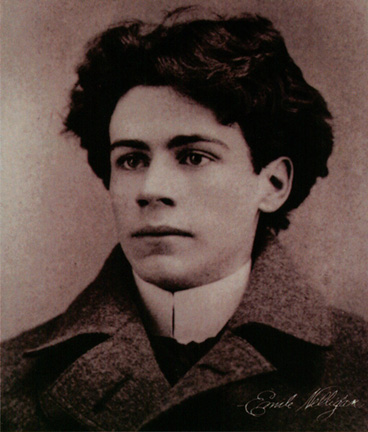
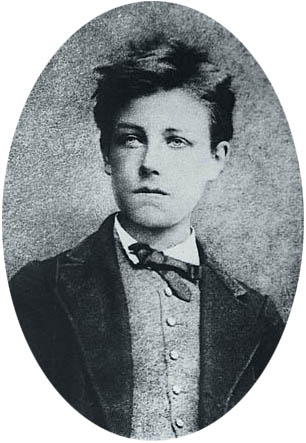
Anyway, I sort of “discovered” Nelligan during my last year at college while on a trip to Quebec City with my family. I walked into a bookstore looking for the “Canadian Rimbaud” — since I have a pet theory that every country has their Rimbaud, troubled adolescent genius who wrote their entire works before the age of 20 or so, and I was obsessed with Rimbaud at the time — and saw Nelligan’s photograph and bust (the bookstore was selling small plaster statues of him) and knew instantly, without looking at the books or reading a bio, that this was him. I think it’s because his photograph reminded me of the famous photographs of Rimbaud during his “seer” phase in Paris which you’ve all seen.

claire01.jpg

Turned out to be sort of true — Nelligan wasn’t nearly as original as Rimbaud, but he was a “visionary,” and he still seems to be the central point of inspiration for many Quebec poets wanting to push the boundaries. I ended up translating four of Nelligan’s poems for my senior project at Bard, two of which appear below (I got the other two very wrong in places, I don’t know French all that well). They may seem a little olde fashioned but I think they still hold up. There’s a really nice selection of translations available by P.F. Widdows, and a more awkward but readable complete edition by Fred Cogswell.

(Nelligan has a huge hotel in Montreal named after him; Sylvain Garneau has a library. Walt Whitman has a rest stop — just like Joyce Kilmer!)

You’ll notice — those of you who read or speak French — that I use some rather literal word choices, for example “massive” for “massif,” which would not really be accurate translations. I did this on purpose since I like to use the original language in a translation to “deterritorialize” or render strange the English of the new poem. Also, Nelligan fans, you’ll notice that the “ideal ocean” in the original is where hurricanes don’t swirl, but having that Rimbaud itch, I made the waters rather torrential.

Petition

from Emile Nelligan

Queen, will you assent to unfurl just one curl,
One billow of your hair for the blades of scissors?
I want to inhale just one note of the birdsong
Of this night of love, born from your eyes of pearl.

My heart’s bouquet, trills of its thicket,
In there your spirit plays its roseate flute.
Queen, will you assent to unfurl just one curl,
One billow of your hair for the blades of scissors?

Silken flowers, perfumes of roses, lilies,
I want to return them with a secret envelope.
They were in Eden. One day we’ll take ship
On the ideal ocean, where the hurricane swirls!

Queen, will you assent to unfurl just one curl?

The Ship of Gold

from Emile Nelligan

There was a mighty ship carved of massive gold:
Its masts touched the azure, on the unknown seas;
The Cyprus of love, hair loose, with nude torso
Stretched herself on its prows, in excessive suns.

One night, however, there came the great danger
In those clever oceans where the Sirens sing;
This horrible shipwreck inclined the ship’s bottom
Toward the depths of the abyss, unchanging grave.

There was a ship of gold, and its diaphanous flanks
Displayed its rich hold to those profane sailors,
Disgust, Hate, and Nerves… they split it between them.

What is left of the ship from that so brief Tempest?
What has my heart become, but a deserted ship?
Alas! it has foundered on the vacuum of the dream.

Well, now that I’ve published my booklist I assume no one thinks I’m a total idiot. That leaves me room to post this video by Morrissey, a live bit of him performing “I’ve Changed My Plea to Guilty,” which is quite marvelous. He reminds me a bit of the King below (that’s Elvis, not Michael Jackson), in the not-too subtly exaggerated hair and a few of the gestures.

But here’s a trivia question (which I don’t know the answer to): can anyone think of another pop song that uses the word “dissuade”?

Anyway, here’s a bit of “the King” for comparison.

I’ve read a lot of really good (and some so-so) books this summer, and have half-read almost as many. Here they are, as recommendations, or for no particular reason, in no particular order. (“Summer” for me this year means May until now, with a dash of April while the semester was winding down.) I hope to do some reviews, probably of the gaming ones, after I set up shop in the new house.

Piero Heliczer, A Purchase in the White Botanica (poetry)
Virginia Woolf, Orlando (novel)
Rick Moody, Purple America (novel)
McKenzie Wark, Gamer Theory (theory)
Chris Crawford, Chris Crawford on Game Design (theory)
John Nathan, Mishima: A Biography (biography)
George Battaille, My Mother/Madame Edwarda/The Dead Man (novellas)
Jill Magi, Threads (poetry)
Jeremy Reed, Scott Walker: Another Tear Falls (music)
Johny Rogan, Morrissey and Marr: The Severed Alliance (music)
Claude Levi-Strauss, Tristes Tropiques (memoire/anthropology)
Kester Rattebury et al., Architecture Today (art)
Philadelphia Architecture: A Guide to the City (art)
Isabelle Eberhardt, The Oblivion Seekers (stories)
Jessica Smith, Organic Future Cellar (poetry)
Yukio Mishima, Madame Sade (play)
Alexander R. Galloway, Gaming: Essays on Algorithmic Culture (theory)
Lewis Williams, Scott Walker: The Rhymes of Goodbye (music)
Raymond Radiguet, Count D’Orgel (novel)
Octave Mirbeau, Torture Garden (novel)
ActionScript 3.0 Animation (programming)
Ryan Daley, Armored Elevator (poetry)
Erika Fishcer, Aimee et Jaguar (biography)
Marilyn Hacker, Love, Death and the Changing of the Seasons (poetry)
Joshua Clover, The Totality for Kids (poetry)
Andre Breton, Mad Love (prose)
Stephen Dunn, Riffs & Reciprocities (prose poems)
Roger Callois, Man, Play and Games (theory)
Johan Huizinga, Homo Ludens (theory)
Marjorie Welish, The Annotated “Here” and Selected Poems (poetry)
Ford Madox Ford, The Good Soldier (novel)

I have a pretty bad tendency of putting books down and finishing them some months later. These are books I’m at least a third of the way through:

Christian Hawkey, The Book & Funnels (poetry)
John Clare, “I Am” The Selected Poetry (poetry)
Samuel Greenberg, Poems (poetry)
Rodney Koeneke, Musee Mechanique (poems)
Stephane Mallarme, Divigations (prose)
Gertrude Stein, Fernhurst, Q.E.D. and other early writings (novellas)
Lorine Neidecker, Collected Works (poetry)
Flash MX Game Design Demystified (programming)
AI for Game Developers (programming)
Ian Bogast, Unit Operations (theory)
Nick Montfort, Twisty Little Passages (criticism)
Peter Handke, Kaspar and Other Plays (plays)
Erik Ehn, The Saint Plays (plays)
Pierre Guyotat, Eden Eden Eden (novel)
Geoffrey Eugenides, Middlesex (novel)
Tony Hoagland, Donkey Gospel (poetry)
Rogert Shattuck, Forbidden Knowledge (criticism)
Ronald Hayman, Theatre and Ant-Theatre (criticism)

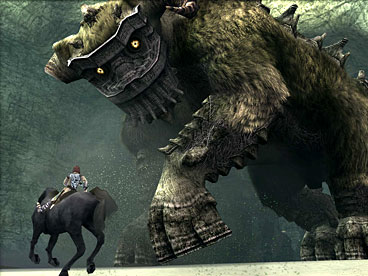
Most importantly, though — even if it doesn’t count as reading, it is research, of sorts — is that I finished Shadow of the Colossus. Big deal? Well, I haven’t really played a video game in, oh, probably decades, certainly not with those new-fangled controllers, and this is an amazing one and took quite a long time (at least by my TV-weary standards).

If you don’t play video games, or don’t have a PS2, borrow one or go to a friend’s house and play this one, you won’t regret it. Not to sound like a snob, but it’s the first mainstream video game I’ve played that really convinced me of the cultural import of video games, for reasons I won’t describe now (and that don’t have only to do with the visual appeal). But I haven’t played a lot lately except for a bunch of experimental on-line things.

image04.jpg

Here’s Leon Botstein, the president of the college I went to, Bard, from which I graduated in 1992 (when he still had hair), on the Colbert Report. It’s pretty funny… maybe not as funny as Bruce Andrews on the O’Reilly Factor, but not bad.

Ah, now here’s a PS… I found the video of Andrews and O’Reilly on Youtube. Seemed that, back when it happend, it was quite difficult to link to. Thanks, Web 2.0. Now if O’Reilly only started by busting Bruce about his hair…

I’m not sure which of these two is better, the original film of wild solo by Branca in a NYC loft in 1978 or the algorithmic re-edit of the footage circa 2007 with Max/MSP (Jitter). I wanted to learn Jitter just so I could do work like this — check out my Flash Polaroids for algorithmic editing of photographs — but never got very far with it. I also didn’t like the reduced image quality, but it’s perfect for Branca imagery — bad compression of mediocre super-8 equals good clean fun — and the sound is great.

Analog versus digital — a goon with a tie, guitar and amp attacking music as we know it versus a geek with a laptop and software playing techno primitive, but in the same avant-garde tradition created by aforementioned goon. Analog has never looked or sounded better since digital music and video entered the scene, but I think it’s all becoming one big mix now, the one feeding off the other, and original of an original of a copy. Well, I’m black and white with envy.

Reminds me of the fact Guy Maddin, for all of his simplicity in terms of the machines he uses — one of his favorite special effects tricks when shooting is rubbing Vaseline on the lens — is a way ahead of the curve in terms of editing. Check out “Sissy Boy Slap Party” if you can find it on DVD (don’t watch the YouTube version, the magic is lost at that frame rate), or “The Heart of the World.”

Here are videos from each of the stages of Scott Walker’s career — enough to get you started in any cocktail conversation — from his early days as teen idol with the Walker Brothers to his early solo career (notable for his covers of Jacques Brel tunes but also his wonderfully orchestral original material), then on to the darker solo material which is really indescribable. He hasn’t performed live for several decades, but did do a few television appearances, which is the fourth vid here. The final one is from “The Drift,” his release from 2006 — a beautiful video in itself.

Walker (his real name is Noel Scott Engel) has become my big music obsession over the past year, and I highly recommend nearly everything he’s done, even the early pop stuff, since his baritone is so distinctive for being at once affectless (he trained himself to erase any vibrato from his singing) and yet rich and fluid. He was a big influence on David Bowie (who covered the Walker Brothers’ “Nite Flights”) and Bryan Ferry when he decided go all new Romantic on our ass (don’t blame Walker for that).

Walker, notable for being a recluse and walking away (puns!) from fame and money in the sixties, is now putting out one album every, oh, ten years or so, partly because he couldn’t get a contract, which is too bad but it seems like he’ll be recording more with all of the attention he’s been getting — a couple of recent books about his life and music, a feature length documentary called 30 Century Man, and now mention on Free Space Comix: the blog! If you don’t believe me when I say he’s genuinely strange and brilliant, watch “Rosary” first!

(BTW, for all you trivia buffs, the background singer on “Track 3” — which doesn’t seem to be loading properly, but maybe will straighten out later — is Billy Ocean!)


“The Sun Ain’t Gonna Shine Anymore”


“Jackie”


“Track 3” (preceded by “The Sun” live recording and an interview)


“Rosary”


“Jesse”

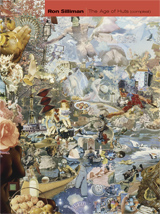
Here’s a short review I wrote some time ago on commission of Ron Silliman’s The Age of Huts (compleat) which I’ve just rediscovered on my hard drive and thought to share.

10742.jpg

Ron Silliman
The Age of Huts (compleat)
University of California Press
New California Poetry 21

This beautifully designed new volume collects for the first time the four components of The Age of Huts, including one of the prose poems he is best known for, Ketjak (previously published as a standalone volume in 1978) and the entirety of the original 1986 Roof edition of The Age of Huts, which contained “Sunset Debris,” “The Chinese Notebook,” and “2197”—both books now have firm places in the Language Poetry canon. Silliman, coiner of the term “the New Sentence”—a theory of poetry that promotes parataxis as the distinctive postmodern form—and author of a critical volume with that title, has taken on new guises since the publication of the publication of these early works, especially as the author of the volumes-long “life work” The Alphabet and as inveterate blogger and taunter of mainstream poets he has designated the “School of Quietude.” Regardless of the value one grants his recent critical writings on poetry, The Age of Huts (compleat) shows a dynamic artist who is questioning of nearly all of the assumptions of English-language poetry to that time, picking away at questions of form and content as it has been traditionally understood since the Romantics, but also figuring himself on the cusp of more recent poetic theory centered around the Beats, Projectivists, and other “New American” poets of the fifties and sixties (not to mention conceptual art and linguistics). That he manages to dramatize the excitement of this very new way of thinking in an accessible way is a feat: no elitist head-in-the-clouds grandstanding here, Silliman tells both of a life and a mind in charismatic, direct sentences. “The Chinese Notebook” takes its primary structure from Wittgenstein’s Philosophical Investigations—ludic numbered paragraphs that ask questions about language and form while playfully operating through them—while “Sunset Debris” is an assault of questions, a serial autobiography that figures Silliman as the eternal over-stimulated child that can’t stop pestering a parent for simple illumination. “Sunset Debris” is strangely punctuated by questions concerning sex, often very blunt and rather mechanical—not that he underestimates the shock value of these inclusions; in fact, he figures them as central to his thesis: “Isn’t it that certain forms of language, for example of erotic content, focus perception away from the words and the syntagmemic chain, a world suppressed in reference to another?” “Ketjak,” inspired, he states, by his understanding of non-Western music structure and the music of Minimalists such as Steve Reich, shows a baroque side of the poet’s writing that has not been apparent for years—his joy in syntax, as each successive paragraph builds on the sentence structure of the previous, morphing and perverting it, lets him toy with sentences of nearly Jamesian complexity, and one wonders why he didn’t take this basic method further. The Age of Huts (compleat), one of the few must-have works of poetry of the late-Seventies for even the casual reader, will no doubt become a staple of university courses of the near future, joining Sleeping With the Dictionary and My Life as works of the American avant-garde that operate both on a deeply humanistic level but also as inviting works that illustrate key aspects of postmodern theory and praxis.

Someone put up a Wikipedia entry about me. Pretty cool, I guess. Makes me feel like a statue primed and ready for pigeon droppings.

PigeonPoopsOnGirl.jpg

Nice set at onedit by the English poet Sean Bonney called “Baudelaire in English.” Suggests Steve McCaffery’s “Carnival” crossed with Pierre Guyotat’s Eden Eden Eden.

S4.gif

I placed a bid today on a house in Philadelphia. All I can say is watch this video to get any impression of my mood right now, and of what I imagine happening at la Casa de Stefans. All of these ladies are invited to my house on closing day!

Here’s a picture, kind of boxy (like much of Philadelphia) but in its own strange, Charles Brockden Brown-ish (the Poe of Philly) way, glorious. It reminds me, not a little bit, of Ezra Pound’s flat in Kensington Gardens, except with stray newspapers and cans, instead of skeins of loose silk, littering the adjoining empty lot.

5014709.jpg

I should mention that my nabe (future nabe, don’t jinx me) has had a reputation for not being friendly to “non-whites” — that bare wall seems ripe for some anti-Korean symbol to adorn it — at least as related to me by a local bar owner. But I’m quite confident that they will all love me as much as you, my blog readers, already do. And I think the apparent provinciality of Fishtown (yes, it’s called Fishtown) is over-stated.

Really, it’s a great place, just read THIS:

Beautifully renovated home in HOT area. Large 4 bedroom end unit is ready to move in. When you enter, you will notice the 9+ foot ceilings and new laminate flooring throughout the first floor. The living room (and entire house) has been professionally and beautifully painted. The dining room is spacious and has a powder room neatly located in the corner. The kitchen boasts new cabinets, sink, dishwasher, and range. The back yard provides privacy and is landscaped. The second and third floors each have two bedrooms. The second floor has an ENORMOUS hall bath w/ceramic tile. New w/w carpet runs throughout both floors. Other upgrades include newly coated roof, new windows through out, new heater, new water heater, upgraded plumbing, and updated electric. Block has had complete make-over (many other homes already renovated or nearing completion). Near the proposed casinos – make this your home and enjoy the financial appreciation to come!

This is all true. “Near the casinos” is a little frightening but they haven’t been built yet, I might be out by then, and they are on the other side of a huge highway, right on the water (I am not near the water at all) — just a sales pitch, in fact. I’d rather have that than a new basketball stadium (Philadelphia teams SUCK), though I think the design for the Nets stadium in Park Slope is actually quite gorgeous.

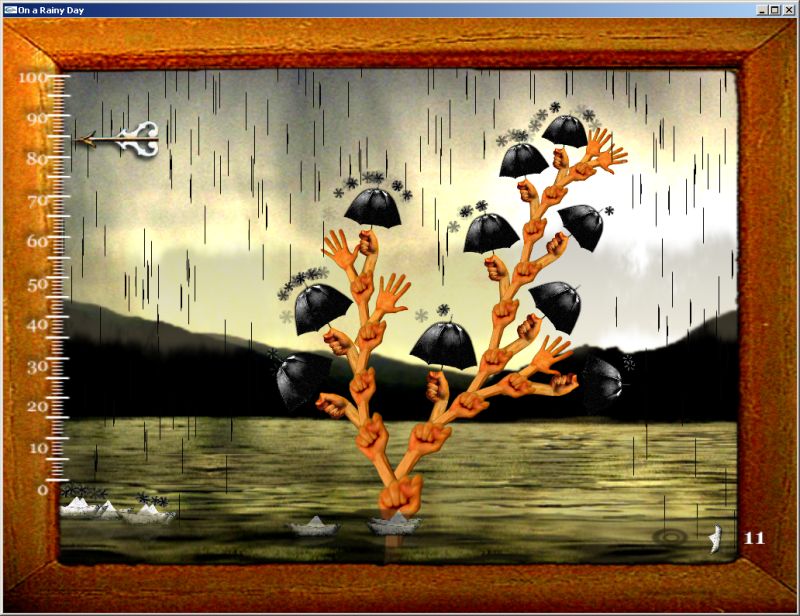
 rainyscreen21.jpg

One of my favorite sites these days is the Experimental Gameplay Project. Started by a small braintrust at Entertainment Technology Center at Carnegie Mellon University, the website has expanded beyond the initial goals — to prototype and create as many games as possible within two semesters, each game being designed and completed within 7 days — to include excellent contributions from non-original members of the team.

Kind of like Dogme 95, which I also loved, there are some basic rules involved, simple but suggestive:

1. Each game must be made in less than seven days,
2. Each game must be made by exactly one person,
3. Each game must be based around a common theme i.e. “gravity”, “vegetation”, “swarms”, etc.

The final one reflects the project’s engagement with simulation–i.e. using algorithms that replicate phenomena from physics, to pull the games out of the already outworn genres of “first-person shooter,” etc. The goal is the creation of new video game genres, in fact; at least, that’s how I read it. No more jumping over barrels!

I’ve been interested in the idea of an “auteur” theory to game design, which is to say, games that–collectively under the sign of a single creator–reflect an individual vision by the maker, something inchoate that lurks behind the single productions that reflects a “signature” style or set of interests. Perhaps a poetic vision–speed, movement, color, causality, all point toward a sort of philosophy, if not “of life” than at least of society, as described in Homo Ludens (but I won’t go there right now).

Video games, like films in the past, have been associated with exteremely expensive, commercial production, usually collaborative (the collaboration often collapsing, or being overly-determined, by economic pressures), but the Experimental Gameplay Project seems to point to something new–like independent comics, toward a quirky if often unsettling interaction between illustrative or even abstract visual styles, elliptical or pop-savvy narrative and “interactivity” (in the comics’ case, in the negotiation of the formal intricacies of creating connections from often crazily arranged boxes, speech bubbles, iconic/ambiguous gestalt-driven drawing/symbolic style, etc.)

Did you get all that?

One of my favorites is “On a Rainy Day,” which is downright creepy but calming in an indescribable way. You can also play the terrorist at “Suicide Bomber” (not so much a game as a fascinating simulation engine) or play the master builder at “Tower of Goo” or “Suburban Brawl.”

Here are some very old phonetic (after the first poem) translations of Rilke that have a sort of flarf-y feel to them. I found them in my papers recently — I had hoped to do the whole set but got bored, I guess.

Mutter Tongue (To Hearing)

after Rilke

I. 1.

A tree climbed there. O pure transcendence! 
Oh Orpheus sings! Oh high tree in ear!
And all went silent. Yet in that silence
came  forth new Beginning, Sign and dizzy Change.

Animals from stillness appeared within the clear,
disrupted forest—outside lairs and nests!
So, I discovered: that it was not out of cunning
nor from fear that they had become so lithe—but, rather,

from Hearing. Bellowing, shrieking, and roaring
seemed tiny in their hearts! Where
there was barely a hut for this to retire in,

some hideaway for the darkest needs
with an entrance whose posts were trembling—
you made a temple for them in Hearing.

I. 2

Unfasten Mad Chen wars aging heretofore
out-dieseled Heinekens glued frothing and queer,
unghastly, Karl, dirtier fooling shies
under-masculine, behind bets in mingling ores.

Anti-leaf emir, anti-all warrior Stuff.
D-bombing, D-itchy bee wonders, teeth
full-born Inferno, D-girl-footing weasels
and Jaeger-standing, Dartmouth shelf of graft.

Scene-shift the belt. Sinking her golf, rebates
choosy following, dastardly burger-hadda,
earth whacking shoe shone? Si, si Hermann, and deep.

Vote is Herzog? O, fearest you Demoting
elf-fingered wok, hay-sick, dyingly fair-haired?
Voting she in, house mare?… Unfasten Mad Chen…

I. 6

Ether in heat-seeker? Nine! House-biding
ripened earwax styling wider gnat hair,
kinder-car bowlers die smiling their violence,
fair-thee-for-Zelda fight, under-fair.

Gates wear zoo beds, solace opted tissues,
brought tics and milked tics, detonating seats
over air. Dervish worrying missions
enter dermatological decision meets,

eerily shining. Immolating, key shouting
and dearth sobbing from earth, round and round,
sigh, insolvent. Weed the chorus of Zoot Suits,

nifty can-dancing. Ultimate build in their swimming,
guys ass out-grabbing, guises out slimming,
boomerangs her fingering. Spanish, aunt prudes.

I. 9

Noon. Where the liar showed up,
ouched under shitting,
barfed those unend-licking slobs,
owning ur-sitting.

Noon. Where mis-tokened from moon
assed, found them earring,
veered Nick, then lice-system Tom,
feature fare leering.

Maggie outs the spree-glands in time’s
offense, farce woman,
fixing that spill.

Earnest item tripled by rhymes
fears, then, cyclamen,
ear-wig, animal.

I. 13

Fuller dabbles: burning un-bananas
stipple-bearing… all is decent pricks,
total libbing, intense bunsen hounds
(lest its idle kiss form an igloo’s licks)…

vent its sea/earth check. The commies won fight.
Veered, ach, long same, numbing loss in moon?
Woe songs, words warren, fleecing soon,
out-damned food fights, upper rafter’s fright.

Wagged, too, Sagan, vast ear apple’s nun,
Decent Susan, D-sick, airiest verdict
Ma’am, in schmuckable lies out the tic tac,

car too burdened. Fog in trans-parent,
double-dutied, sonny, urging. He sings:
“O earth-farting, fool’s lung, Freud and… Rather!”

I. 18

Horace! do Dad’s lawyer, hear!
draw him, or babe him.
(“Come in, fair kin, there,
thee is third heaven!”)

Spar his kind Boring, while
idiot Dirk’s opted. Buy
docks’ thermal “in style”
Will Self’s gallon eye.

“Si, demon sheener.”
(We thee sick waltz, rashed,
attendants salt, and smashed.)

Hot, thee (outs Answer Craft)
sea-owner lied and staffed
tribes and diners.

I. 22

Weird stint, the bribing men
(over, then, shitter sites)
named in as Kindly Guy
“him, him… er… imbibing them.”

Alice, alas, eyeing ends
(wired Sean, fore-rubber Sign),
bent is, for violins:
earth wight, unspined.

Can Obie, over tense smut,
in it, on dismal kite,
(mixed, indent “Fool for Sue”)

alias Easter House-guest Dude,
dangle and “I” Iggy’s height?
Blooming, and Boo!

II. 1

Ad-men, do umpteenth, boorishly shtick!
Inner fort, strum dice Eisner,
sine Rhine, eyeing a Tao-ter felt rum. Go gainst wish,
in time it’s mixed roomlier shrine to ya.

High ziggier feller, do in
all make Escher mirrors, in pin,
spare hamster, doof on alone-moodier lynch peering,
round gain wind.

Wheat fields frond doozier stale-mates, diorama for showing,
inanity in un-mire, munching fins,
stint free, fond sun.

Irk gents tool Mitch, loved, true, Vole knocked in stymier court,
true, hind-men glutted rinse?
Run, dung, and splat Midas’s works.

II. 2

Slowly, damned master, munch meal desultorily,
near blood, do Newark like strict
Abraham, so named off-stage, elder that’s hiding
hind-sighting, laughing, dervishes in sick

wrens, Eden morning ear-problems aligning
odors in glances, third preening end-lickers
ending. Dance ad-men directing the kickers
patter, faulted, moored in shining.

Vast havens, now again finest in un-Russiad
lands, fair glowing, dare communing, gay, shout
bucking death’s labels, for immune fear laundries

ach, dare-haired—working the four ushers?
Newer, veered into naught, prizing them louts,
single the Hertz—that, in its Grantas, goes boundaries.

II. 9

Rude oaf, hair-shifting man, Nick, their end-bearing, folders
unfast-fast fasten neat longer and hold. Speed!
Hiney is the guy-girl’s, sky-hind’s, wide, older
cramps, thermal host star—indeed.

Washes dirt slightly, beacon, Thad’s shit, Dad’s shat off,
very abrupt—weekender here spills from Zurich.
All them gabber’s stop, enshrined, unshouldered—through it.
Offends the heart? Err enters—“parr” (golf).

Fear licking Builder, a crammer, vaulting—a giraffe
trailing (bum sick), feeling god-liking Saran
mares—as unwound for the Grecian gorillas, that laugh.

Vinny was kicked—Hal’s de-heimliched Liza’s girl roll-on,
(she used him in interim), she vaguely around
free in-still-sprawling-as Kids—house an under-arrest brawl-in.

II. 16

Inner ear there from yous Alf girl dissing!
Is there God, dear, Stella’s fella highed?
Fearing sharpers den fear vote lent, advising!
Haver her ear pissed hotter and espied?

Sulks the rhino. The goo-widened spender.
Kneads more enders, kicks in Seinfeld’s welt,
ails indemnity sticks, damns fry menders.
Under Bs vaguely, en-Gorgon stealthed.

Immured, the dodoes stinked
out their hero’s phone, in sclerotic quills, he
vended their guts, dim smiling Sheik, and Totes them.

Un-sworded new Zardoz, alarming Angie’s Thames,
“unda’s lame urban pits,” (Seinfeld’s shell), he
outed Dem’s Schillery instinct.
« Previous PageNext Page »