gamer_theory_cover_new.jpg

I’ve just finished a major upgrade to McKenzie Wark’s personal site. It’s a site I designed several years ago when I was in my “cheap sites for artists” phase — Abigail Child, Tim Ellis, Jane House, the Segue Foundation and my sister, Lindsay, were all beneficiaries of this mode of my existence.

I’ve just added a slew of reviews in several languages, along with a bunch of other stuff such as images of books covers of Japanese, Greek, French and Italian translations of his work. It’s interesting to see where these various cultures go with the subject matter of Wark’s texts — designs negotiating the “underground” yet commercial aspects implicit in an academic book deriving partly from post-Situationist theory.

I’m not doing freelance anymore, too much other shite to do and I can’t bother to keep up with all the Web 2.0 upgrades. I’d be more prone to design someone’s blog these days than design a new website.

But I’ve always liked the solution I came up for Ken, which was to stick to a sort of nothingness.org aesthetic — keeping it in the Situationist agit-prop Unibomber’s-typewriter sphere of things, but touch it up with a little Flash and making it perfectly (easily) expandable when new material comes in, so any teen anarchist could make an update should she want to. Very Web 1.0.

http://www.ludiccrew.org/wark/index.htm

Ken is the author of A Hacker Manifesto and Gamer Theory, both of which I highly recommend. I have my problems with both books — I’m not sure how much both fall into the category of postmodern entertainments rather than the sort of foundation radical theory that they allude to (if not aspire to be, though I’m not sure about that), but in terms of prose strategies — crisp (if not quite Debordian) rhetoric, the pacing of the text, the synthesis of observations grounded in new media phenomena and classic “crypto” Marxism — they are very lively and suggestive.

Marx and Rez — two great tastes that taste great together. (Uh, did that sound glib?)

Yo-Yo Labs, The Figures, Roof, United Artists, Granary, & Ugly Duckling invite you to a party at:

Jack Shainman Gallery
513 W. 20th
May 17th, 2007
from 5:45-8PM

celebrating the publication of the following books:

a (A)ugust, by Akilah Oliver
UNTITLED WORKS, by Tonya Foster
NOTES FOR SOME (NOMINALLY) AWAKE, by Julie Patton
FERVENT REMNANTS OF REFLECTIVE SURFACES, by Evelyn Reilly

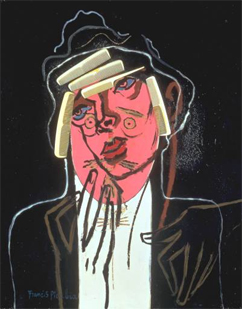
ARE WE NOT BETRAYED BY IMPORTANCE, by Francis Picabia
SEEING OUT LOUD (back in print), by Jerry Saltz
COLUMNS & CATALOGUES, by Peter Schjeldahl
MINE, by Clark Coolidge

IFLIFE, by Bob Perelman
FOLLY, by Nada Gordon
MAKING DYING ILLEGAL, by Madeline Gins & Arakawa
KLUGE : A MEDITATION & Other Works, by Brian Kim Stefans
NINETEEN LINES : A Drawing Center Anthology, ed. by Lytle Shaw

MY AUTOBIOGRAPHY, by Barbara Henning
SOLUTION SIMULACRA, by Gloria Frym
JOIN THE PLANETS, by Reed Bye
ACROSS THE BIG MAP, Ruth Altmann

SOME FORMS OF AVAILABILITY, by Simon Cutts
A TESTAMENT OF WOMEN, by Johanna Drucker
PARADIGM OF THE TINCTURES, by Steve McCaffery & Alan Halsey
ALMA, OR THE DEAD WOMEN, by Alice Notley

PAPER CHILDREN, by Mariana Marin
INSPECTOR VS. EVADER, by Paul Killebrew
THE HOT GARMENT OF LOVE IS INSECURE, by Elizabeth Reddin
THE STATES, by Craig Foltz
COMPLETE MINIMAL POEMS, by Aram Saroyan


 picabia.jpg

“The Handsome Pork Butcher,” Francis Picabia

In addition to my albatross, “Introduction to New Media Studies,” I am teaching the following courses next year at The Richard Stockton College of New Jersey. I encourage all of you to apply.

LITT 3127: Modernist Literature
A broad survey of literature of the “modern” period (approximately 1900-1950) in Europe and America, with an emphasis on formal innovation — Brecht’s “epic theater,” Woolf’s stream-of-consciousness, Eliot’s use of pastiche, etc. – with some consideration of concurrent developments in the visual arts, music, philosophy and technology. 

LITT 3xxx: Experimental Writing Workshop
Prerequisite: Intro to Creative Writing
A workshop geared toward the writer – poet, playwright, story and non-fiction writer – who wishes to experiment with a wide array of writing practices and formal strategies, both traditional (sestinas, villanelles, alliterative verse) and experimental (cut-ups, constraint-based, visual, hypertext, etc.).

LITT 2xxx: Video Game Narrative Studies
An introductory course that examines where fields of ludology — the study of games — and narratology — the study of story and plot — converge, including sessions on indie games, MMORPGs, serial fictions, social represtentation and game design “auteurs.” CSIS and ARTV students encouraged to apply.

GAH 3xxx: American Experimental Theater
A survey of contemporary poetic and experimental theater, including established figures such as Mac Wellman, Richard Foreman, The Wooster Group, Sam Shepherd, Maria Irene Fornes, Spalding Gray, Charles Mee and Susan-Lori Parks and newcomers Richard Maxwell, Young Jean Lee, Madelyn Kent and International WOW Company.

This might very well qualify as my first ever autobiographical post on this or any other blog with the exception of Facebook, where I mostly just lie. But anyway, these are my summer plans (because, alas, I have them!).

  1. Figure out how to break my lease in my present apartment without losing lots and lots of money (and my dignity).
  2. Put all of my stuff in storage and go to Montreal for two months and live in a cheap (even free) room and learn French.
  3. Develop my several new classes for Stockton College, including Modernist Literature, Video Game Narrative Studies, and American Experimental Theater. (By “develop” I mean learn something about these subjects — like, read shit. And play LOTS of video games…).
  4. Develop a handful of new sites for Stockton such as the NMS site and something called “The Fhiz” (which might very well be “The Flaht”).
  5. Finish the websites for friends that I have already been paid for that I have been putting off for two and a half years.
  6. Drive my car to New Mexico for no other reason than to listen to a lot of music and because Vincent Gallo did it.
  7. Find a new apartment in Philadelphia. (Near the Chinatown bus. Near the hipsters of Fishtown. Near the art galleries. Near something.)
  8. Drive to Bard, drive to Long Island, drive to New Jersey, oh just drive.
  9. Writing projects: I have three plays I want to write (or one play that has three stories, not quite sure — all about DAMAGED PEOPLE) and a short novel that takes place in Philadelphia in the 19th century, soon after the completion of the Eiffel Tower in Philadelphia’s City Center (you see, France had offered us this crappy statue of a woman holding a bunch of flowers but we declined — not modern (read: masculine) enough — so they gave us, instead, this other thing that was in the works, a big pointy triangular phallus-type thing made entirely of metal — a metal banana! — which we liked and thought would be a great place to hang the Liberty Bell, hence its placement in this great city and not off the coast of the East Village — the premise of my novel. Oh, and it’s steampunk).
  10. Do something about the screenplays I have written (like, burn them).

I have other things in mind, but ten is a good number. Interpersonal stuff? I haven’t gotten to that stage on my blog. But in case you ever need to call me, or target me for some dastardly deed, at least you know, roughly, where I be.

Here’s something personal: I might get a CAT.

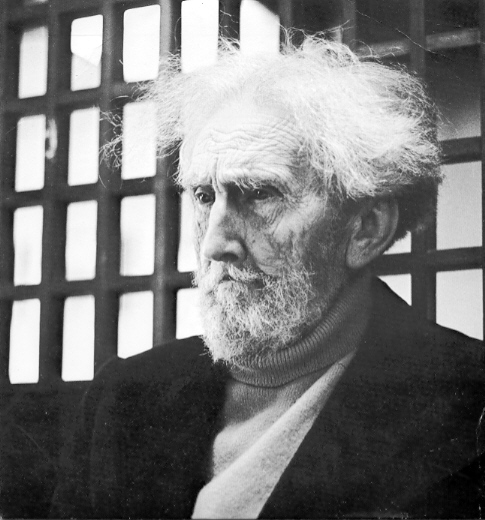
The scariest man in poetry… though here, he looks like John Wieners (I mean, the turtleneck).

Pound-Ezra_Erker-Verlag_St-Gallen.jpg

I wish they would put one of his (very bad) operas on PennSound someday… I really want to hear Le Testament (which is, I think, the only one recorded).

http://www.writing.upenn.edu/pennsound/x/Pound.html

Nothing moves very quickly in the poetry world, but I was very happy to have Fashionable Noise, from 2003, reviewed in the online journal EconoCulture by a guy I knew (barely, he was two or so years younger than me, which in college means a decade) back at Bard named Mike McDonough. He’s got a sense of humor!

How I Learned to Stop Worrying and Love Cyberpoetry

by Michael McDonough

Fashionable Noise: On Digital Poetics
by Brian Kim Stefans
Atelos, $12.95
ISBN 1-891190-14-8,
Supplements to the book can be found here.
    I hates cyberpoetry
    And I can’t hates no more
        — a poet

I had no idea what cyberpoetry was before I encountered Brian Kim Stefans’ book Fashionable Noise: On Digital Poetics, (Atelos 2003) and, subsequently, the work on his website http://www.arras.net/.  I already knew Stefans as a brilliant student of Modernism, from our undergrad years at Bard College (he was seriously into Zukofsky’s A when I had just figured out Lawrence Ferlinghetti), so I thought I would give it a try.  I figured anything with the prefix cyber- was going to be self-consciously cool and high-tech. 

A chat Stefans had with Darren Wershler-Henry is transcribed in the book, and it provides a breezy overview of the field, but abounds with high-tech jargon and avant garde movements: Neo-Fluxus and Brazilian Concrete are just the tip of the iceberg.  There seem to be as many sub-genres of cyberpoetry as death metal.  Soon, we’re down to genres with only one pure practitioner—maybe not the best start for a beginner.  But the chat makes clear that cyberpoetry exists in the zone where words meet readers: the interface, a word I am going to say a lot in this piece.  Some examples of artistic interfaces are animated texts, digital settings of printed texts, and cyberpoems created by running source texts through various computer algorithms. 

Read the rest of the review…

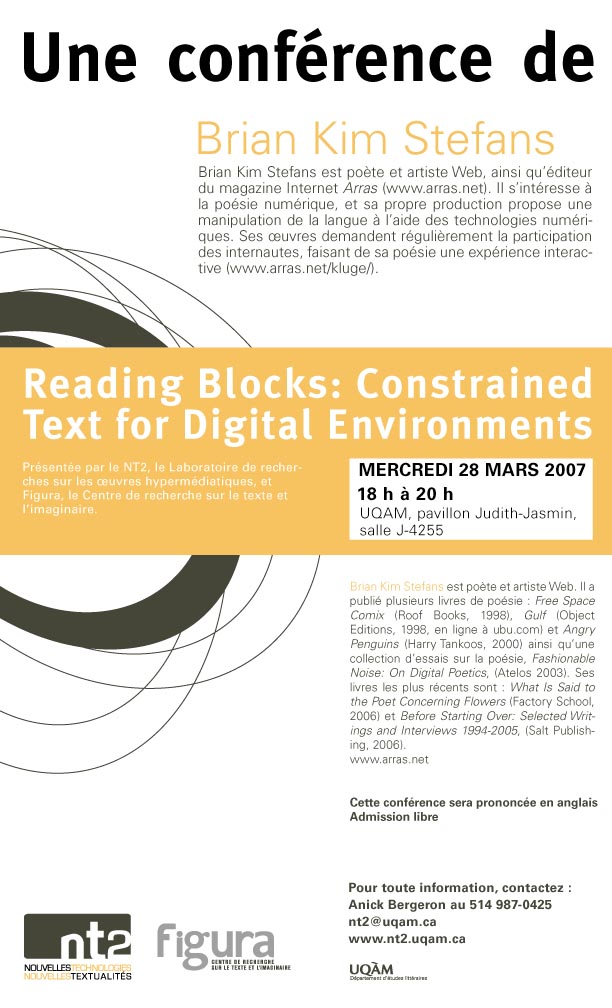
Conference by poet, e-poet and Web artist Brian Kim Stefans

The NT2 Laboratory on Hypermedia Art and Literature at UQAM University (http://www.nt2.uqam.ca/) invites you to a conference by poet, e-poet and Web artist Brian Kim Stefans:

“Reading Blocks: Constrained Text for Digital Environments”

Brian Kim Stefans has published several poetry books including Free Space Comix (Roof Books, 1998), Gulf (Object Editions, 1998, downloadable at ubu.com) and Angry Penguins (Harry Tankoos, 2000). His newest books are What Is Said to the Poet Concerning Flowers (Factory School, 2006), collecting over six years of poetry, and Before Starting Over: Selected Writings and Interviews 1994-2005 (Salt Publishing, 2006). Stefans is the editor of the /ubu (�slash ubu�) series of e-books at www.ubu.com/ubu and the creator of arras.net, (http://www.arras.net/) devoted to new media poetry and poetics.

This conference is presented by the NT2, The Laboratory on Hypermedia Art and Literature and Figura, the Research Center on Textuality and the Imaginary and will be held on:

WEDNESDAY MARCH 28th 2007
6 pm – 8 pm
Universite du Quebec – Montreal,
Judith-Jasmin building,
Room J-4255
(Berri-UQAM metro)
Corner Saint-Denis-De Maisonneuve E.

The conference will be given in English
Free Entry

For information, contact:
Anick Bergeron at 514-987-0425
nt2@uqam.ca
http://www.nt2.uqam.ca/

montreal_poster.jpg

1. What do you consider the most essential difference between “literature” in the age of print and “literature” in the age of programmable media? Is “literature” an obsolescent word?

I don’t think “literature” is any more obsolete a word than it has been. Cultural studies has permitted a lot more material to the realm of literature than new media has, in a way, because of the lowbrow/highbrow issues it dealt with. I think things like Young-Hae Chang’s work should be considered “literature” even if it is in a genre that is entirely new and unique to itself. I have a pet theory that all successful works of new media literature create their own genres – that seems part of the point. And the Oulipo suggested that the series of constraints that govern a work are the “literature” itself. John Cage’s work is “literature” though he is often discussed in terms of his techniques rather than through, say, “close reading.” I don’t think that novels or plays or print poems will go away, and only changes in consciousness – such as the switch from Enlightenment ideas of literature to Romantic – really make changes. So whatever changes that new media has brought about in that way are the important issues, not the technology or even the techniques used in writing (though they do involve changes in “consciousness” in terms of their aesthetic appreciation – those are important). I’m still wondering whether there will ever be a pretty solid “canon” of new media literary works that will have the same kind of mystical draw the “classics” of literature have had. But I’m an insider – I’m always interested when one of my students views one of these new media works with the same kind of awe I used to view the poems of, say, Ezra Pound or John Donne. History, the passing of time, adds a lot to a work.

2. What is the destiny of text in the emerging literary arts?

I don’t really know. That all hangs on how seriously the creators of digital textual works take learning how to write. Some of them are really terrible writers, or at least I don’t understand at all what they are getting at. But others are pretty good writers and also programmers, so they are in the double bind of having to teach themselves how to write for digital environments, which is akin (to me) of the first screenwriters trying to learn how to write words for films that weren’t novels or plays. It’s just a different way of writing – screenwriters don’t write long monologues for their films, for example, it just doesn’t work, and quite often they are compressing complex ideas into the form of fortune cookies, single sentences that have to say a lot. I’m not sure that all writers working with digital textuality are taking this idea of genre seriously enough – they are simply writing the way they thinking “writing” should be done regardless of how it will be presented, and in digital literature, “presentation” is a good deal of the game (like in movies). One doesn’t imagine that Virginia Woolf wrote thinking about the final typesetting of her novels, but then again (since her husband Leonard was doing it) she knew what the final product would look like. But it was still a “book” – digital writers do not have that assurance, they are creating their own “books” all the time. Digital writers are also often quite terrible designers, which doesn’t help. But several are getting there, I think. Nothing is inevitable, though – I don’t think there is a “destiny” in the sense that something is bound to happen, and if so, we are in no position to anticipate it as new technologies just change the rules all the time. Television as we know might be dead – just look at YouTube and Tivo and all that stuff – but book culture isn’t quite threatened in that way (it’s been threatened for so long by TV, movies and pop music that it’s already made its adjustments).

3. How would you describe (the process of) writing in programmable media?

Mostly involving the use of “constraints” – like the sonnet, such a popular form of quickly consumed poetry laced with subjectivity, in the way the better pop lyric is now, was a constraint. These constraints are partly socially determined, partly determined by the interface the writer has created for the presentation of the work, and also determined by the algorithms that govern the work. It can’t just be Romantic effusions, on the one hand, that don’t recognize bounds of form or length, and they can’t be simply fragmented, elliptical writing, since the avant-garde tradition is exhausted in this regard, and digital environments tend to break up text all the time already – good constraints can often gird a text against the sorts of tearing apart that algorithms inflict on it. I talk about this in Fashionable Noise, that the big difference between print text and digital text is that digital text is vulnerable to algorithms.

4. Where/when is (your) emerging literature produced, “read” or “performed”?

Sometimes in gallery exhibitions, sometimes at talks, often assigned for classes, but generally just online through links. Most of my digital work is not “read” often – I rarely have anyone come up to me quoting a line from “Dreamlife of Letters,” but it’s happened. My work has also been presented at the Remote Lounge in New York, a bar that had a television set at every seat, etc. I never managed to get a gig at a rave.

5. How do you envision the (any) future of “literature” as an art form?

Perhaps I’m conservative, but I don’t envision any huge changes quite soon. I think the fascination with the use of pure information in literary objects, especially poems, has been around for much longer than we have recognized, since Browning and Pound at least. That seems to be the main contribution of Google searches and the other aspects of freewheeling digital textuality on the web have made. In fact, the easy availability of huge piles of pure information have made the experiments of someone like David Foster Wallace a little less interesting – I think quieter, almost monastic literature will make a comeback of sorts (think Gide), like the way analog recording techniques and synth sounds made a comeback in the face of sampling and digital sequencing. If visual and animated poetry were to take over the world, it would have done so a long time ago, which isn’t to say that more and more people are going to do this type of work in the future. The fact that more poets are professional-quaility typesetters now than ever before is a sign of this.
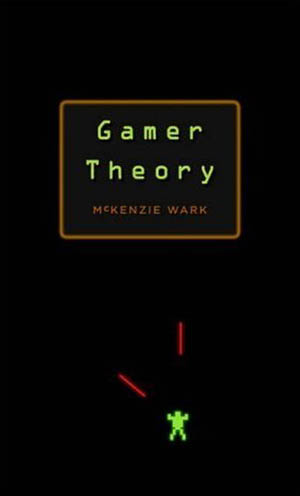
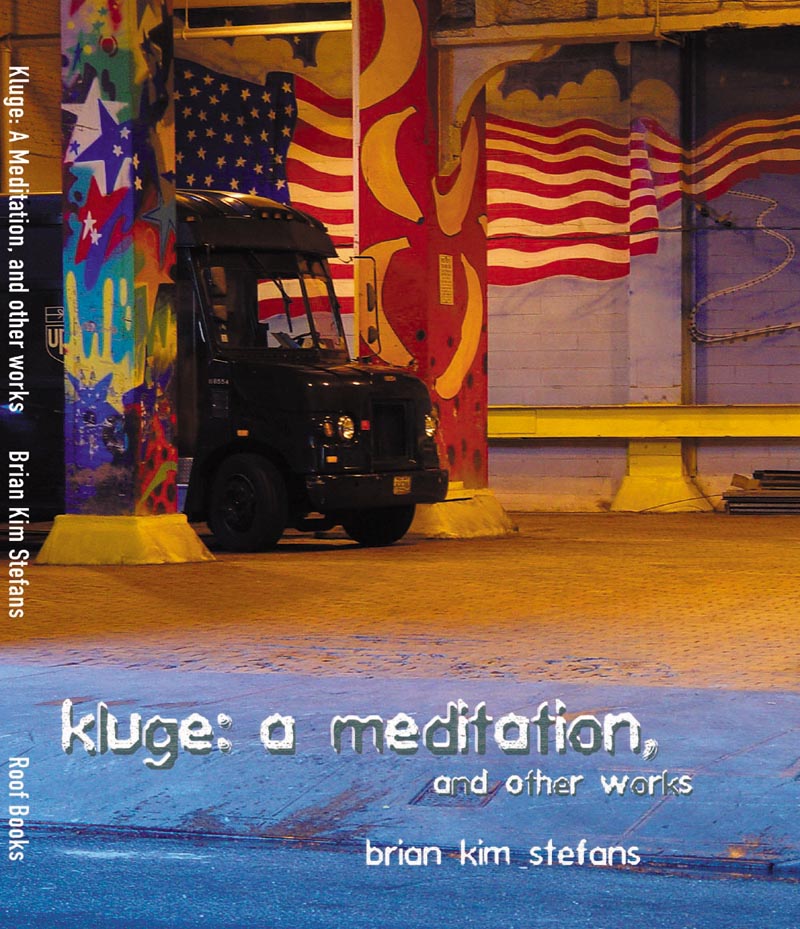
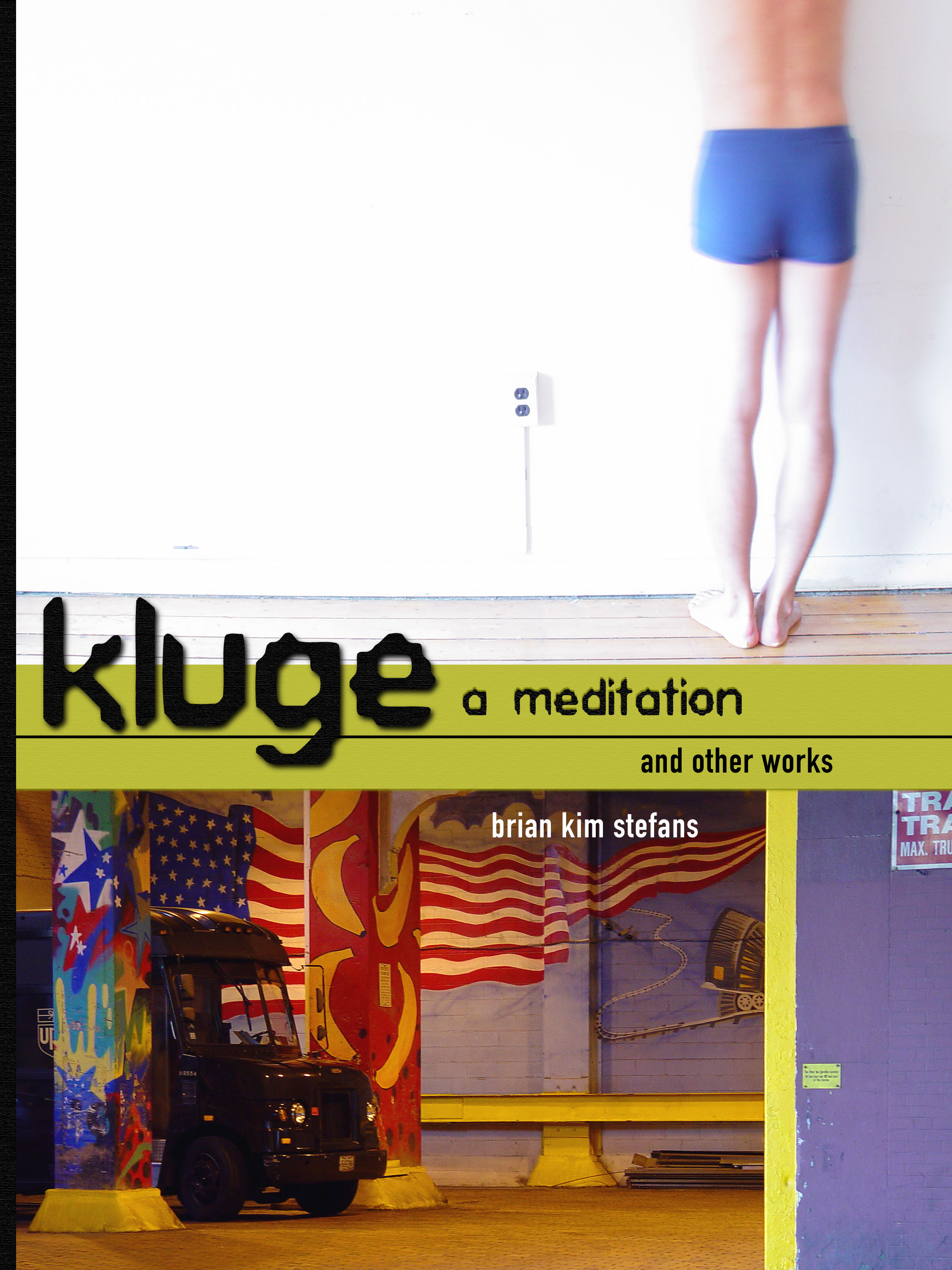
The trim size has changed on the book, and the publisher’s didn’t like the new cover I had designed (see below) which I confess is a bit strange. Anyway, so now we’re back with the old cover, but in a more horizontal shape.

 kluge_cover_web.jpg

Working on the book cover of my forthcoming Roof Book, Kluge: A Meditation, and other works. Some stuff from my Brown days of yore (including a play and two short essays) and some older things that are offered as proof of my artistic decline (er, awakening).

“The Further Adventures of Oedipus Mess in the Countess’ Second’s Flat” is the long opening poem, symptomatic of oh about everything. Kind of in the “What Does It Matter?” mode, but more astract expressionistic — lots of page splatter.

The guy in the photograph is me. I didn’t talk some young man to strip to his blue underpants for my camera (but with no air conditioning in sweltering summer, when I thought air conditioning was bourgeois, it was not hard to convince myself to strip).

Photos taken in my Williamsburg days prior to moving to Providence when I was still very excited about taking photographs (alas, some of that is coming back).

kluge_front_cover_new_type copy.jpg

The Kelly Writers House

welcomes

poets BRIAN KIM STEFANS &

SUEYEUN JULIETTE LEE

— for a reading & conversation —

—————————————-

Tuesday, 1/16 at 6 PM

3805 Locust Walk

This event is free & open to the public

Everybody but the Mighty Quinn… 

Friday, Dec 29th
9-11
Art Alliance (SE corner of Rittenhouse Square, 251 S. 18th St.)

Aaron Kunin
Adam Fieled
Sasha Steensen
Dennis Barone
Aldon Neilsen
Juliana Spahr
Bill Howe
Bob Perelman
Brent Cunningham
Brian Stefans
C. A. Conrad
Camille Martin
Carla Harryman
Caroline Bergvall
Cathy Eisenhower
Charles Bernstein
Christian Bok
Eduardo Espino
Elaine Terranova
Ethel Rackin
Evie Shockley
Frank Sherlock
Hank Lazer
Herman Beavers
Jena Osman
Jenn McCreary
Jennifer Scappetone
Joan Retallack
Johanna Drucker
John Wilkinson
Josh Schuster
Barrett Watten
Kathy Lou Schultz
Lamont Steptoe
Laura Moriarty
Leevi Lehto
Linda Russo
Linh Dinh
Loren Goodman
Mark Wallace
Matthew Cooperman
Michael Tod Edgerton
Michael Davidson
Nat Anderson
Nick Monfort
Norma Cole
Patrick Durgin
Peter Middleton
Prageeta Sharma
Ron Silliman
Susan Schultz
Timothy Yu
Tom Devaney
Tom Orange
Tyrone Williams
Walter Lew
Will Esposito
Yunte Huang
 

[Here’s an announcement about an event I’ll be reading it in New York this Friday…]

The Theatre of a Two-headed Calf  and Paul Willis bring you:

Salon-Saloon #9

Friday, December 15
Party starts at 8.

Performances start at 9.

Winter Company performs electronics(Paula Matthusen & Jenny Olivia Johnson)
Brian Kim Stefan reads
Johanna Meyer dances
Michelle Handelman shows some video

The Loft of Paul Willis in DUMBO
135 Plymouth #305
Brooklyn

F Train to York

$5 gets you in
$10 gets you in and 3 drinks
$20 and you drink for free all night
$50 = happy ending

Beer and Wine and maybe something Holiday-ish…

Biographical Stuff

Here’s something totally great that Paula Matthusen did: www.fillingvessels.com

Here’s where you can watch videos and performance of Michelle Handelman: www.michellehandelman.com. There’s one under “performance” called Passerby>Ghost Sites that I love.

Here’s the fascinating poetry etc… website that Brian Kim Stefans runs: www.arras.net

Johanna Meyer has creating and performed dance/theater at all the big places (DTW, Movement Research, PS 122, etc…) and will perform an excerpt from her new piece BEARSHOW.

Can’t wait!

Friday (yes, this one), December 8th
7-9 pm

Higher Grounds Café
631 North 3rd St.
(near corner of Fairmount)

“What Is Said to the Poet Concerning Flowers” (poems)
Brian Kim Stefans
Published by Factory School
http://www.factoryschool.org

“The Dog” and “The Last Hot Day of Summer” (stories)
Nathan Long
Published by Popular Ink
http://www.popularink.com

FREE

Books and T-shirts for sale…
Drink and foodstuffs provided…

SHORT READINGS BY THE AUTHORS
SOME VIDEOS BY BKS
BUT OTHERWISE
SIMPLY CARROUSING

…with you…

http://www.arras.net/fscIII/?p=205

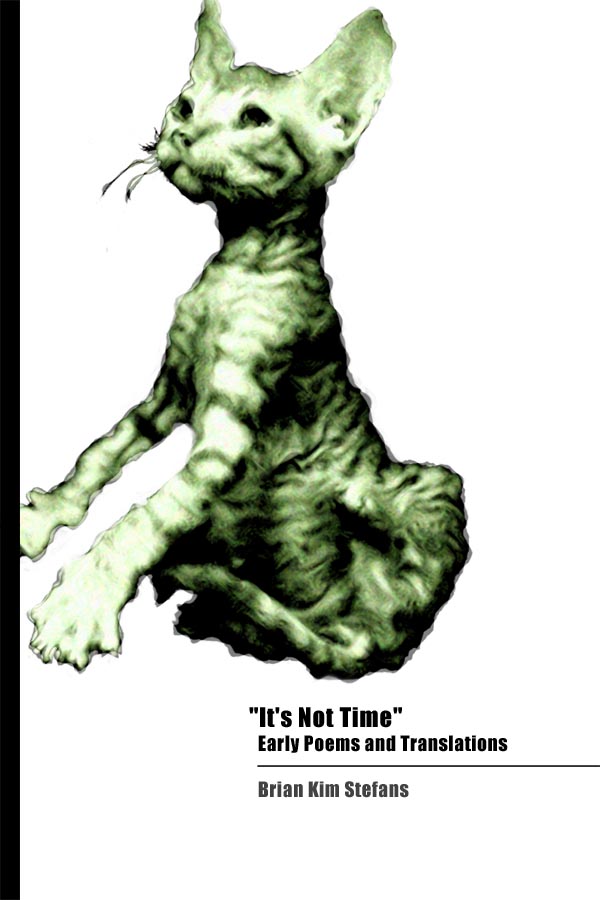
I’ve been playing around with Lulu.com, a print-on-demand publisher, for the past several months, making little books, experimenting with cover designs, having them printed and sent to me, etc. Kind of testing the waters to see if I want to be a print publisher with Arras again, since I’ve been enjoying print design much more than web work lately.

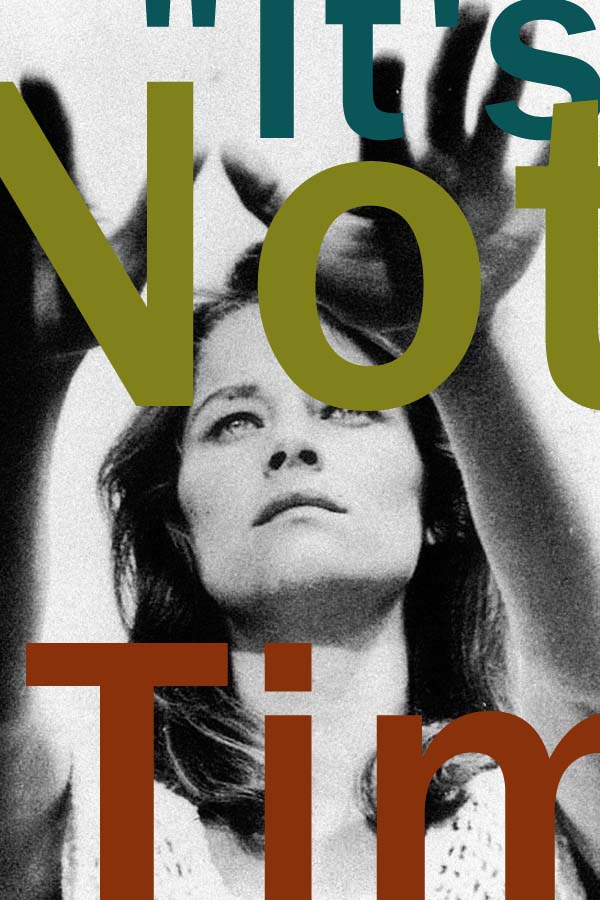
It’s been fun if a bit solipsistic considering I’ve been using early and “uncollected” poems of mine. Yes, vanity indeed. But I’m done now, just “finalized” this collection which I guess is available for purchase at Lulu. I’ve tried to keep the shite out.

Don’t tell Charlotte Rampling–I know she’s on your Facebook account somewhere–that I’m using her face for the back cover. It’s a promotional still for the science fiction big budget B-bonanza starring Sean Connery and a number of British extras called “Zardoz,” which is probably a better name for an anti-anxiety medication than “Xanax” IMHO.

its_not_time_back_web.jpg  its_not_time_front_web.jpg

I’m updating this post just to mention how much I love this typeface. It’s called A.D. Mono and it’s available for free here:

http://www.getfreefonts.info/free_font.admono.html

Click the poster below to enlarge if you can’t read it well:

 bks_nathan_invite.jpg

Here are some brief descriptions of ideas for courses at Richard Stockton College, should I take a position there as a full time professor:

New Media for Children and Education

This will be a workshop course in how to design web sites and Flash applications for preschool children and for the classroom. What sort of interfaces appeal to children? How can new media augment a traditional education? Students will spend a month learning Macromedia Fireworks (an imaging program) and Flash (an interactive graphics program). We will also read and discuss children and creative educational literature and websites. For the second half of the semester, students will work on a final project that has either an educational function or is geared toward children.

Hypertext Fiction, Poetry and Non-fiction

This will be a workshop course for which the first half will be entirely devoted to writing in the various genres above with traditional “workshopping” critique sessions, and reading the classics of hypertext literature and holding up to the same values we expect of print literature. During this time, rudimentary skills in Fireworks and Dreamweaver will be acquired along with basic typesetting skills. For the second half of the semester, students will work on a final project that will encompass issues of writing, design and interactivity that characterize a successful hypertext work while keeping an eye on its print manifestation.

Writing for Video Games

In this class, we will read and play several of the “classic” video games that involve textual experiences by the users with a mind to treating the text like one would a screenplay — as a literary genre primarily associated with a visual (and highly lucrative) medium. We will consider these games in relation to the traditional genres of literature, such as drama and fiction, and read several interactive fiction texts. Students will also acquire a working knowledge of a software program or programming language (not sure which one yet), and work on crafting textual, interactive experiences in these programs.

Electronic Editing and Publishing

This is a workshop in print design (in Photoshop and Illustrator), typesetting (in Quark if they have it in the Mac lab, in Word if not) and print-on-demand services such as Lulu.com. Students will have produced a professional looking perfect bound publication by the end of the class. The content will be a collection of writing of some nature – poetry, essays, etc. – which can be either collected online or via submissions from peers. By the end of the class, each student will have conceptualized, edited, designed, typeset, and finally “published” a paperbound book through Lulu.com.

[I’ve been invited to be a part of this… come on out! I’m in the “Beer and Pretzels” part of the day.]

Now that Adam’s Books has been open awhile, and opening wider each day, the time has come to celebrate. For example, this Sunday, November 12: THE ADAM’S BOOKS GRAND OPENING CELEBRATION PARTY.

If you haven’t visited the store recently, you might be surprised at how grand it has become. The shelves are full. The books are sorted and alphabetized. There are soft, comfortable chairs. There are more and better and grander books than ever before.

So: SUNDAY NOVEMBER 12: all afternoon and evening, from 12 to 10 pm, the GRAND OPENING party to celebrate ADAM’S BOOKS. There will be balloons.

Also: short readings by several of the neighborhood’s finest writers. (See below for schedule.)

You can dance if you want to. This will be a party.

ADAM’S BOOKS is located at 456 Bergen St., between 5th Avenue and Flatbush.
That’s north Park Slope, Brooklyn, just around the corner from the Atlantic Yards landgrab.
Steps from the 2,3 Bergen St. subway; a short walk from the MNQBRW2345 Atlantic Ave subway hub.

12 pm – 3 pm:  COFFEE & MUFFINS

12:00 – 1:00 : Rick Pernod, Andrea Baker, Bronwen Tate
1:00 – 2:00 : Jenn Guitart, Tisa Bryant, Lynn Xu
2:00 – 3:00 : Christopher Myers, Erika Howsare, Jackie Delamatre, Juliette Lee

3 pm – 6 pm:  BEER & PRETZELS

3:00 – 4:00 : Will Hubbard, Jess DeCourcy Hinds, Amber West
4:00 – 5:00 : Eve Packer, Holly Tavel, Fred Schmalz, Brian Kim Stefans
5:00 – 6:00 :  Mac Wellman, Erin Courtney, Jonathan Ceniceroz  

6 pm – 10 pm: WINE & CHEESE

6:00 – 7:00 : Anika Haynes, Gareth Lee, Brenda Iijima
7:00 – 8:00 : Luisa Guigliano, Jennifer Hayashida, Christopher Stackhouse
8:00 – 9:00 : Bonnie Emerick, Amy King, Adam Tobin

Adam’s Books
456 Bergen St. 11217
(between 5th Ave. & Flatbush)
Brooklyn NY adamsbooks@earthlink.net
718 789 1534

Yay… (I ripped this off of Amazon).

stefans-cov.jpg

Stefans’s multigenre Fashionable Noise: On Digital Poetics (2003) has already emerged as a major text on its subject, and his digital poems would make most cognoscenti’s top 10 lists. Published simultaneously with Stefans’s essay collection Before Starting Over (Salt Books), this set of five chapbooklike sections of poems reads like a “real playstation/ or organic whist” that treats history as a kind of textual joke; every line signals a deep, playful, Frank O’Hara–like imbrication in the 20th-century’s pains and pleasures: “Pound’s flopping of oars… crises that approach with the grace/ of guttural, 32-bit Nazis, or with jodi.org’s antique ‘pro-situ’ strains.” The section “The Window Ordered to be Made” contains “They’re Putting a New Door In” (which made The Best American Poetry 2004) and “Poem Formerly Known as ‘Terrorism’ ” (“I’m hurt like Rocky,” notes its speaker). There’s a set of 15-line poems documenting the travels and travails of a figure named Pasha Noise, who also appears in a concluding comic strip (with illustrations by Gary Sullivan). These new poems broaden the range of Stefans’s wonderfully supersaturated sensibility. (Nov.)

Copyright © Reed Business Information, a division of Reed Elsevier Inc. All rights reserved.

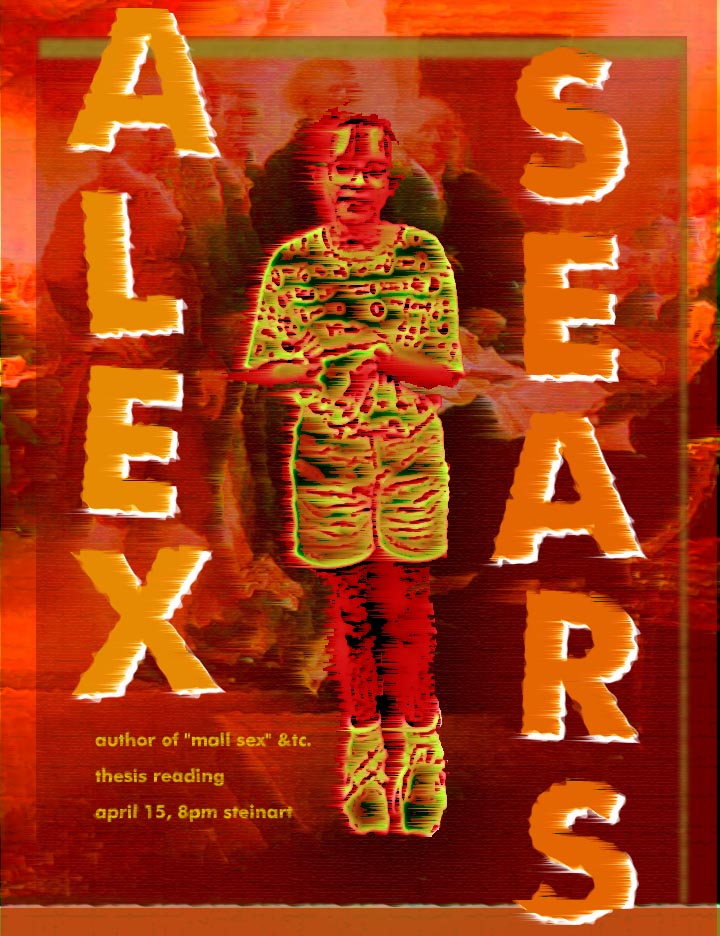
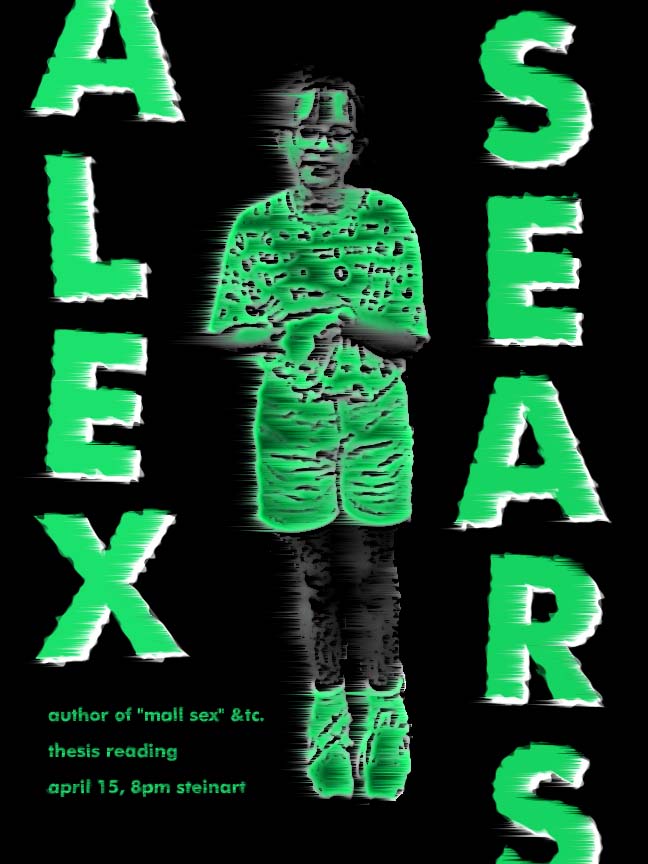
Here are two poster designs I found on my hard drive today… never really used except for one letter-sized test print of the colorful one. I still think they’re kind of funky… click to enlarge.

alex_poster_color.jpg

alex_sears_thesis_poster.jpg

« Previous PageNext Page »