This has been on heavy rotation on my laptop recently. Elvis singing “one of the most recorded songs of the 20th century,” sweating about a gallon of prescription drugs (mostly during the falsetto break, which he nonetheless crushes) in the process.

I’m also really curious about how he can flash those irreverent, even innocent, smiles during the more dramatic parts of a pretty melodramatic song, and I wonder what the joke was that he was sharing at the moment, and with whom. It’s Mona Lisa all over again.

This was one of those days when I barely ventured outside, just stayed in and took care of business. Here I am at 10:30 kind of amazed at the weird variety of shite I “did” today.

1. booked a ticket to Mexico City for a short vacation in September (with possible artist talks), travelling with my friend, the poet Roman Lujan (he’s got some accents in there which I can’t reproduce)
2. created new header graphic and wallpaper for FSC (which I consider decent work for the half hour I devoted to it, but otherwise not mindblowing)
3. posted long list of electronic literature works on both this and the netpoetic blog (based on notes I had taken in the past few days)
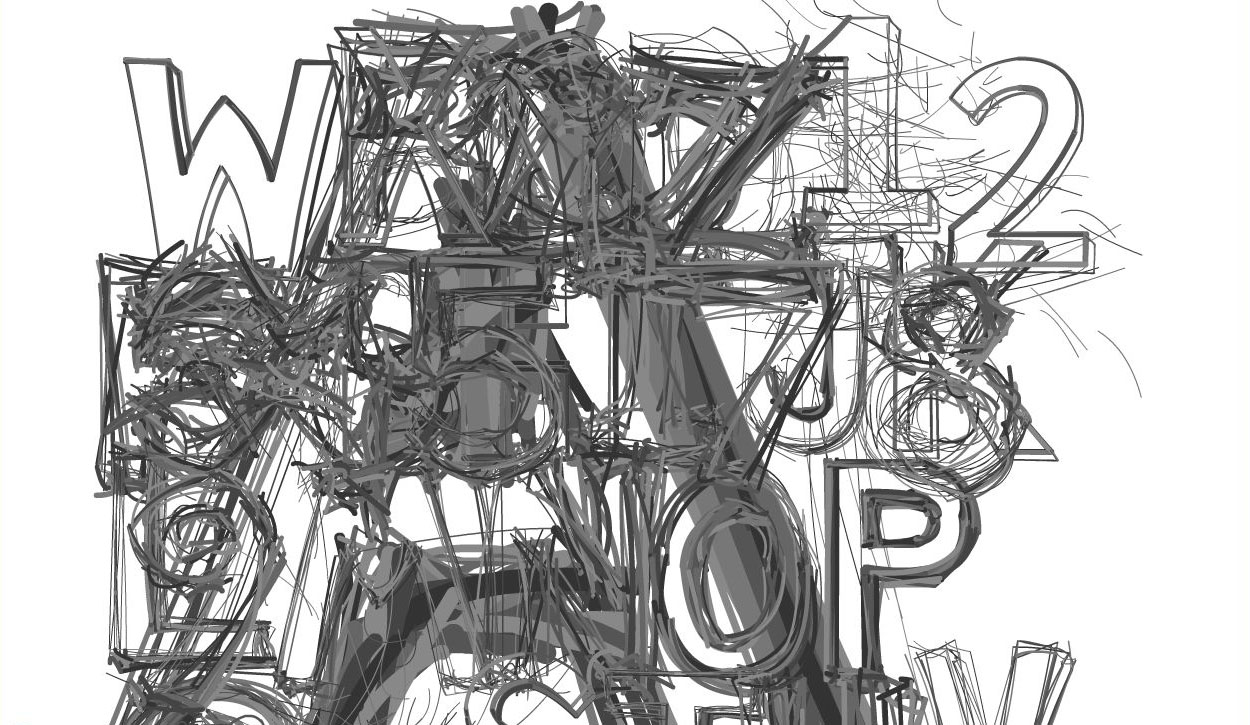
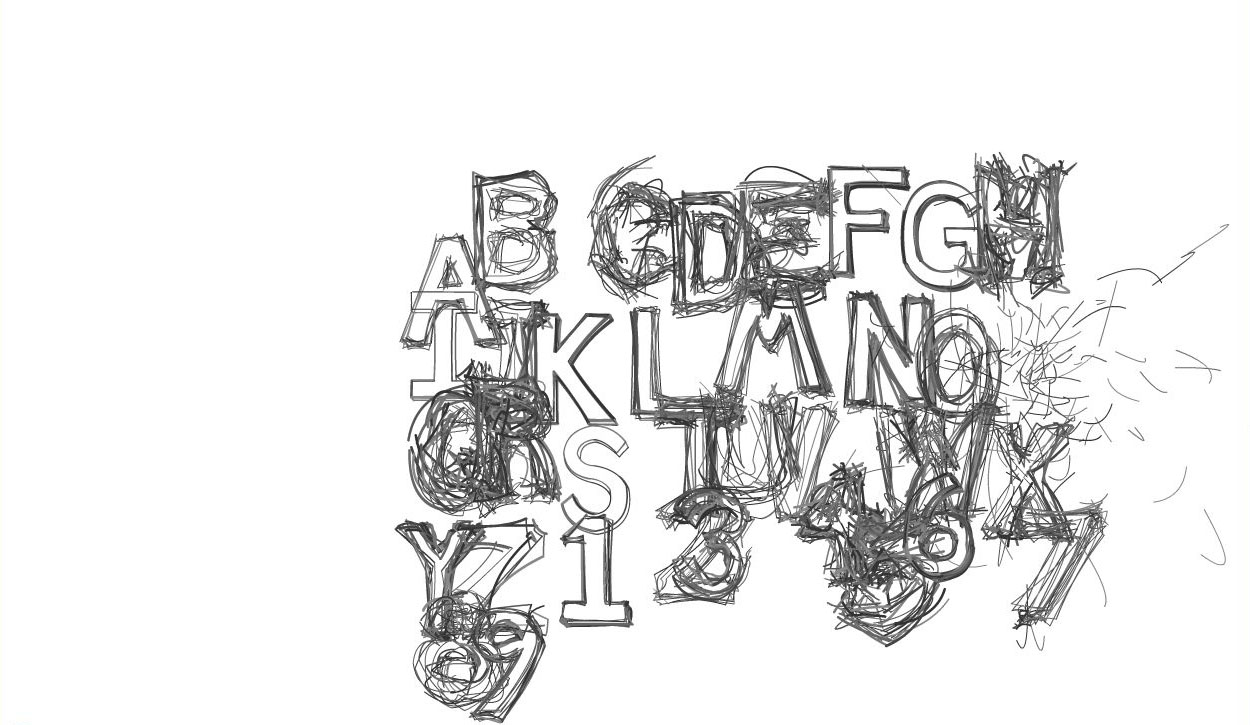
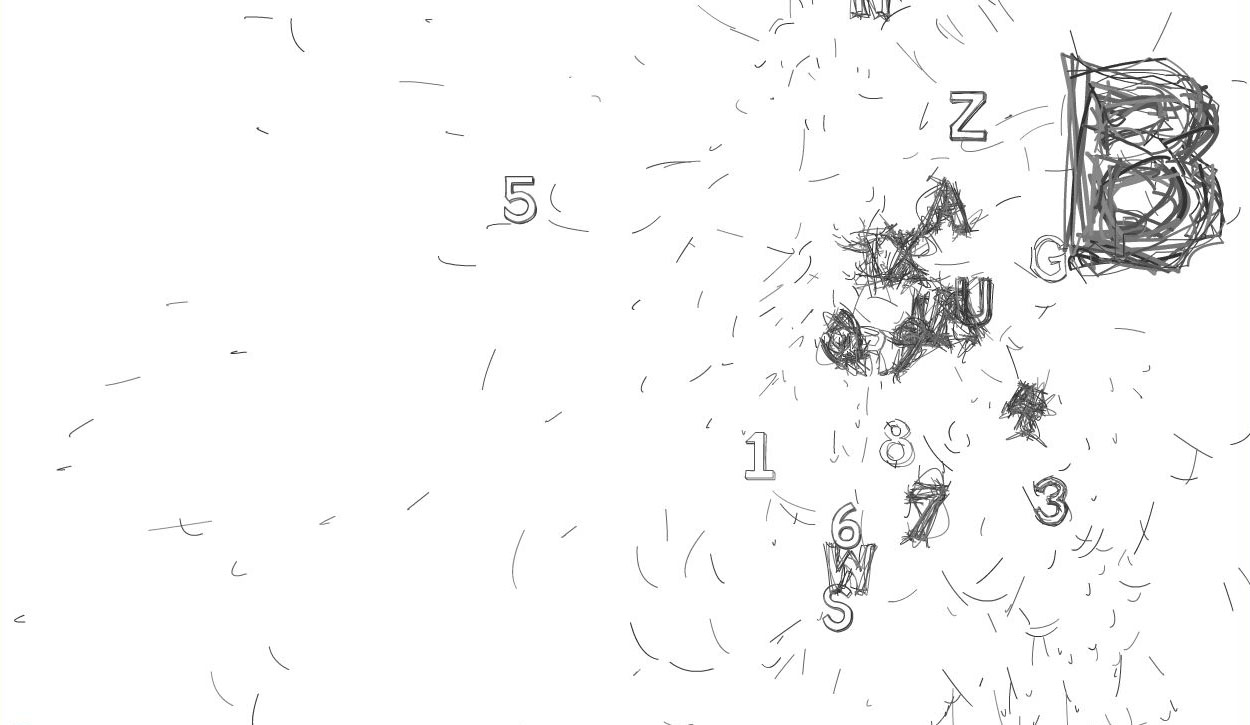
4. figured out the problem with the exploding-letter algorithm in the new version of Scriptor that I am creating in Processing
5. started (finally) reading New Philosophy for New Media by Mark B. Hansen, some of which was making my eyes bleed but is really sinking in (about up to page 70)
6. sent off copies of two of my poems (rather old ones, one a sestina, the other a translation of Jules LaForgue) because they are being nominated for a Pushcart Prize (maybe I didn’t understand the e-mail correctly, but that’s what the editor wrote)
7. did actually venture out to Ralph’s supermarket to buy some decaf coffee, Krazy Glue, and a bottle of wine
8. tried to figure out, with the Russian lady who manages my building, Vera, why the smoke detector in the second bedroom here has been going off all day — she’s a trip, speaks nearly impenetrable English
9. wrote some cranky emails about this or that (an editing project, an old website I designed that went down because the owner didn’t renew his domain name), and also some nice ones (but always very short)
10. acknowledged some Facebook friend requests (of course!), because everybody loves me — never met any of them before
11. read the Wikipedia entry about Paul Mcartney and Wings, as some of their songs had been coming up in Pandora and I was lovin em (read articles about Bill Clinton and Kim Jong-Il also, contemplated changing Facebook photo — again — to portrait of Kim Jong-Il)
12. downloaded the graphics from the Richard Stockton Overdrive website since I know it will be coming down soon (nobody seems to care about it at Stockton), and I want it for my portfolio
13. made dinner for myself, shared it with my sister (this was the brief moment of my day when I actually interacted with organic material, i.e. an onion and several mushrooms; also communicated with organic material, i.e. my sister)
14. received in the mail the mini-camcorder I ordered online, the Flip Ultra HD, and walked around the apartment shooting ridiculous things like my books and my face, and then downloaded the videos to my iMac, then deleted them
15. wrote a very short blurb for an 800-page, $199 book by Matthew Timmons called Credit (I’m afraid he doesn’t like it), and agreed to do a blurb for Catherine Daly (I think hers clocks in at 146 pp.)
16. watched the catcerto
17. totally screwed up my wireless router in an attempt to get my sister on my wireless network, proceeded to panic for twenty minutes, but actually got it working again in a reasonable amount of time (about an hour)
18. reflected on people I miss and should call, or who should call me (but this was all in the process of multi-tasking)
19. used Krazy Glue to repair the broken slats from these creepy Hollywood blinds that come with my apartment — seems to have worked (Vera showed me how to use the blinds properly so they won’t break)
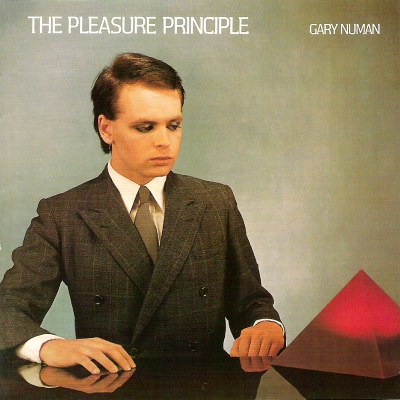
20. listened to a few tracks from Gary Numan’s The Pleasure Principle (see illustration), an album I’m really trying to love but not quite getting there with (it has some classic tracks, though), and listening to half of this amazing record by Dokaka called Human Interface, recommended by Christian Bok who calls him a “preternatural vocalist” on Twitter — available for free download
21. wrote short email to ubu list about George Kayatta (learned about him from William Poundstone), the self-described megagenius painter, jazz musician, translator of the Bible into rhyming couplets, and one of the “mathematical cranks” in Underwood Dudley’s book of that title — I’m sure I’ll post about him soon
22. checked out the amazing ambigrams — texts that read the same way upside down as they do normally — of Gilles Esposito-Farèse, as well as those of someone he admires, Scott Kim — both of these sites are worth checking out
23. sent information to ex-student who never spoke in class who wants me to write a rec for her for some internship, describing therein her great public speaking and interpersonal skills (a fairly trivial bit of activity, this last, but for some reason I’d like to remember it)
24. finalized plans (I think) for lunch and a visit to LACMA with Johanna Drucker to see show of 12 Korean artists and other fun stuff (also wrote thank-you email to William Poundstone for meeting me for lunch yesterday, sending him, among other links, one to David Daniels’ The Gates of Paradise)
25. watched Youtube video of Ukrainian band Los Colorados do great cover of Katy Perry’s “Hot and Cold” — pasting this one below — then proceeded to do “research” on Katy Perry — Wikipedia entry, “I Kissed a Girl” video — since I’m so out of touch (and I read about her in some magazine this month)

26. washed the dishes, drank the wine, wrote this post (didn’t shower, though), and revised post excessively as I remembered things from the day…

I think that’s about it, at least among observable phenomena. The strange thing is that, for the most part, I’ve been quite depressed today. Just feeling glum. I think that’s part of the modern condition, actually, leaving yourself open to a plurality of distraction in lieu of some grand scheme for one’s life, and I guess I get a little bummed because of that.

But I learned a lot. And now I’m writing this, an autobiographical blog post!

This is something I posted on netpoetic recently. Thought I’d put it here as well.

I’ve actually been scanning the internet, trying to find new (and old, forgotten) projects to include in a class I’m calling “Poetry in the Age of New Media.” I wish I had used “time” instead of “age” in the title, but I think there was a hint of satire in the use of “age,” like we were all Victorians or something (it would have been hilarious if I had used “era”). I think “time” would have been perfect, actually, as time is not only the subject but the content, the material, of so much new media art.

I’m sure much in this list is known to readers of this site. It’s mostly things that have not appeared in the ELC1 collection or which have not gotten much play (such as Facade), and mostly from artists outside the purview of “e-literature,” though not exlusively. This isn’t highly edited or exhaustive — really just pasted notes.

The Gates of Paradise, David Daniels
http://www.thegatesofparadise.com
Total outsider stuff, pdfs, some of which are animated. Links somewhat with the idea of “conceptual writing” that is promoted by writers such as Kenneth Goldsmith and Craig Dworkin (see the conceptual writing anthology on ubu.com). David died about a year ago.

Dagmar Chili, Toadex Hobogrammathon
http://dagmar_chili.pitas.com
More total outsider stuff, by someone who I had a small correspondence with years ago, but whose identity I still don’t know. I’ve blogged about Toadex quite a bit on www.arras.net/fscIII.

New Digital Emblems, William Poundstone
http://williampoundstone.net
Actually, Poundstone has a number of substantila projects, but I think the emblems are the most neglected as the piece is involved and seems to be non-fiction. I haven’t looked at his new pieces. I’m having lunch with him on Monday (never met him before). [P.S. The lunch went swimmingly, he’s a cool guy.]

(more…)

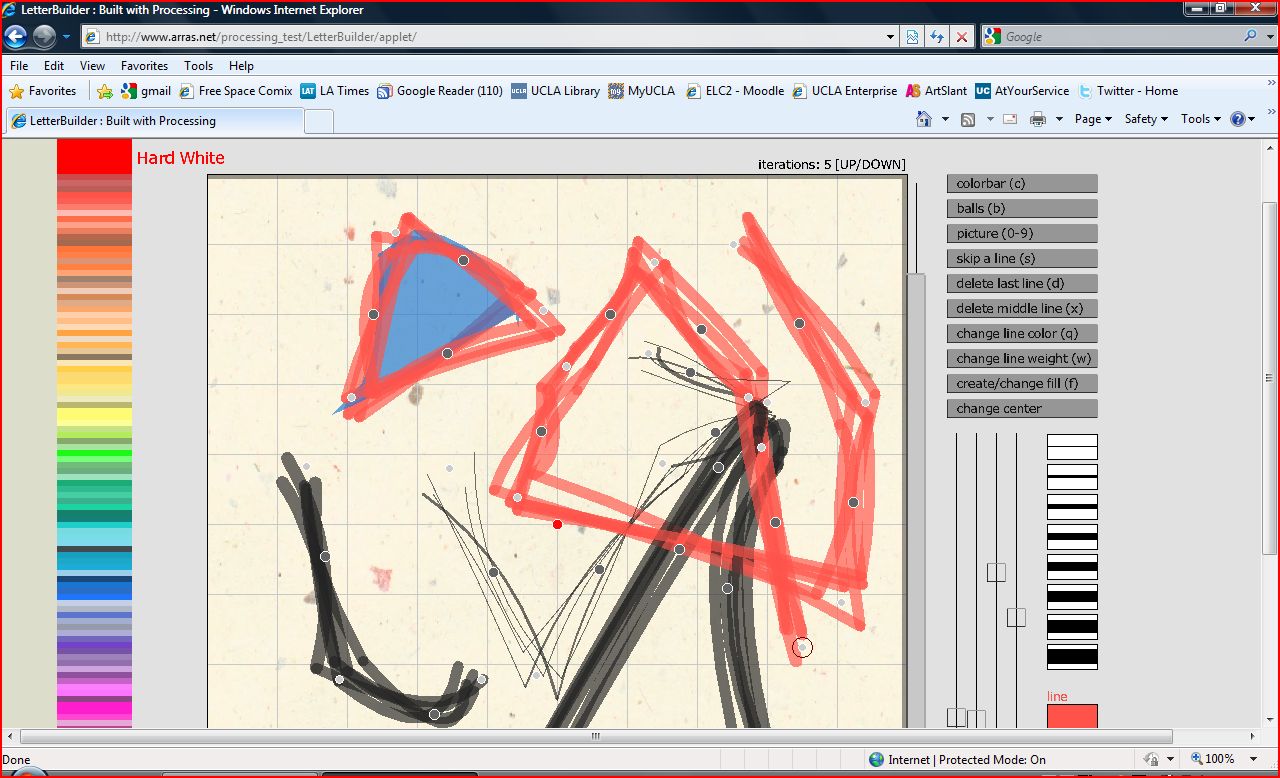
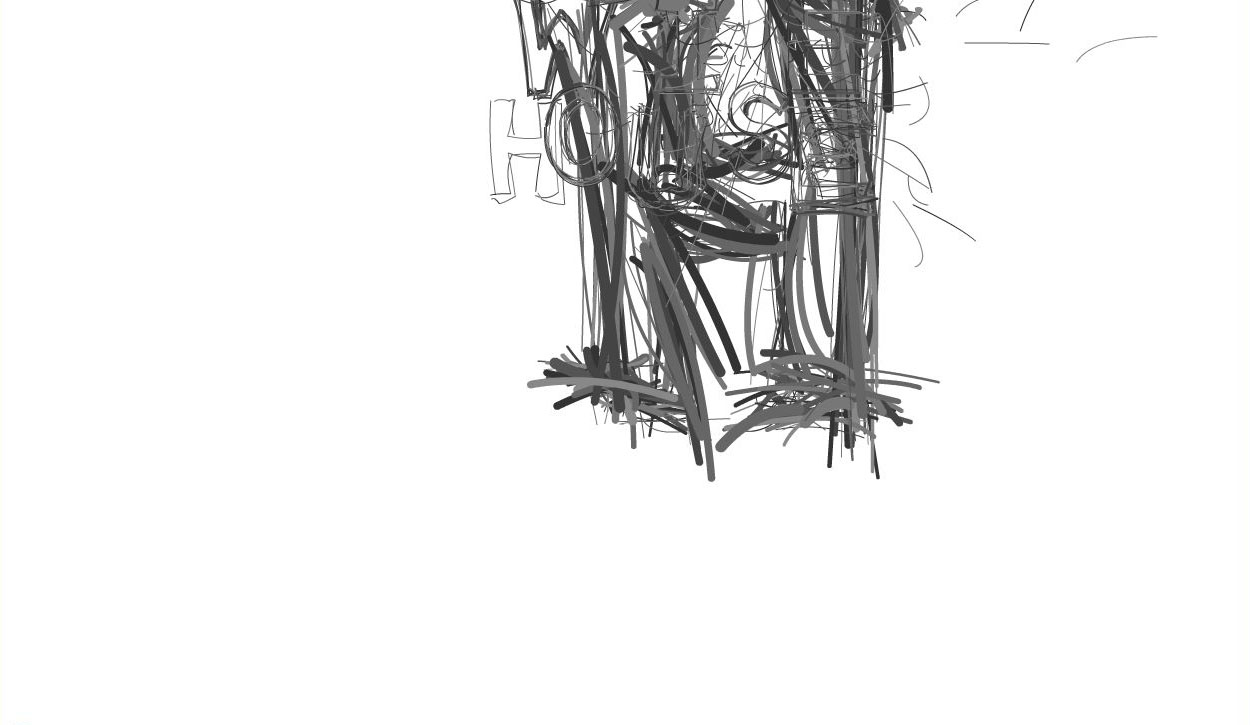
More or less done with this first version of the Letter Builder. It doesn’t do much for a user on the web since you can’t actually save a file (for security reasons having to do with Java). I’m looking for a work-around.

If you open the program up and press “l” (lower-case L), the image above will be loaded, but in its animated form. I’ve also created a short instruction manual for the tool, in case you decide to take your letter builder seriously.

Pressing the 9 key will load an image of David Lynch. You can begin to trace his face by changing to TRACE mode (by pressing M). Changing the opacity of the image by using the number keys will make tracing easier. That’s a fun way to waste an afternoon.

The Lynch image is just a proof of concept. My hope is to be able to trace letterforms and other pictures, but I don’t have a proper loader designed yet.

http://www.arras.net/processing_test/LetterBuilder/applet/

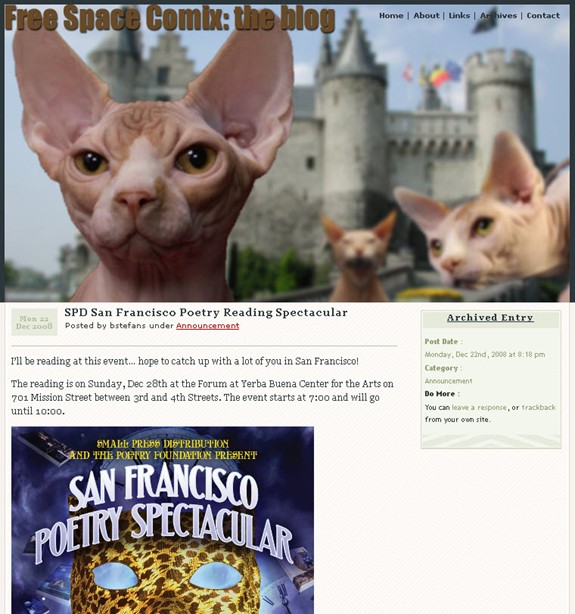
Two people, my friend Anna Guercio in Los Angeles, and a Sphynx Cat lover named Allison Reynolds in Australia, managed to locate my header through Google image search. I could have sworn I tried that myself, but I guess I didn’t use the right terms. It’s an archived image of the header from a blog post on a site called Zero Strategist about blogs, and includes a snippet of the fab San Francisco MLA reading poster from December.

Unfortunately, it’s of a lower resolution than the original header, so I can’t take this image and blow it up without it being obviously deficient. But it’s neat to see that the fickle but generous memory of the internet has decided, somehow, to hold on my cats. (And thanks to Todd Pitt at Zero Strategist for using my blog as an example!)

I tried to find the image on the Wayback Machine but I guess this internet archive project just captures the code, not the multimedia aspects of websites, so Free Space Comix, which appears there in bits and pieces, has empty spaces where the header should be as well.

I’ve been developing this little software application in Processing for creating letterforms and doodles for future versions of the “Scriptor” (here and here) series of digital projections. In fact, I’m moving the whole project from Actionscript to Processing, if for no other reason than that Processing was invented by one of my peers at UCLA, Casey Reas, along with Ben Fry. Processing is also built on Java, which I’m guessing runs a little bit faster than Actionscript, but of this I can’t be sure. (more…)

…(if you are reading this on my blog, and not on Facebook), I’ve accidentally deleted the Free Space Comix sphynx cats header, and I don’t have a backup anywhere. I was upgrading WordPress and replaced a directory where, unbeknownst to me, the image was stored. If for some strange reason you have the old sphynx cat header stored on your computer (perhaps in a cache), then send it to me.

I.e. if you see the cats at the head of this page, left click on the image and save it to your computer, and then email it to me! I’d owe you a Tecate and back rub.

[Announcement for a talk I’m giving at a new art gallery right around the block from me called the Eighth Veil, a great new addition to the handful of interesting galleries here in Hollywood/West Hollywood. The name of the gallery actually derives from the name of the go go bar that sits right next to it, Seventh Veil. I don’t know Gregory’s work but his talk sounds really great.]

AN EVENING OF TALKS WITH POET AND SCHOLAR BRIAN KIM STEFANS & ARTIST GREGORY WIEBER

Thursday, July 16th
(One night only)
8PM

EIGHTH VEIL
7174 Sunset Blvd. (@ Formosa)
Los Angeles, CA 90046

Asked by current exhibition curator Jibade-Khalil Huffman, to speak on the subject of writing and/or language in its relation to image (and vice-versa), Kim Stefans and Wieber will address, among other things, the very nature of images and image-making (be it text-based work or otherwise) in our current climate.

Brian Kim Stefans will present, “The Lure of the Scrawl,” a talk about the possibilities of animated handwritten script in digital text art.

Stefans is a poet and digital artist whose recent books include Kluge: A Meditation, and other works (Roof, 2007), What is Said to the Poet Concerning Flowers (Factory School, 2006), and Before Starting Over: Essays and Interviews (Salt Publishing, 2007). His digital works such as “The Dreamlife of Letters” and “Star Wars, One Letter at a Time” have been shown in gallery settings worldwide; his most recent project, “Scriptor,” recently opened in Los Angeles. many of these can be found at his website, www.arras.net. He is an Assistant Professor of English at UCLA, specializing in poetry and electronic writing.

Gregory Wieber will present, “Complexity out of Chaos,” a talk about markets, societies, online social networks, and life itself as complex phenomena which often arise out of chaos. How much of what we assume to be random is actually pre-determined? This talk will look at examples of chaos and complexity in a variety of situations.

Wieber is a multi-disciplinary artist living and working in Los Angeles. An alumni of Bard College, Greg left New York for California in 2004. In addition to his personal artistic endeavors in music, art, and photography, he works in the field of interaction design — most recently for Electronic Arts (EA).

Eighth Veil is a new contemporary art exhibition and publishing house located in Hollywood, California. Eighth Veil provides artists with studio space on the premises in which they can conceptualize printed matter and closely oversee its production. This opportunity is extended to artists exhibiting with Eighth Veil as well as individuals chosen by the gallery, commissioning works on a per project basis. Eighth Veil aims to develop close relationships with artists and provide more visibility to their process, allowing creativity beyond their normal medium and into print.

For more information please contact Nicole Katz: nicole@eighthveil.org or 323 645 6639

For press inquiries please contact Jessica Trent: pr.avantgarde@gmail.com or 310 968 9373

eighthveil.org

Here’s something you might hate me for, excepting those who think that Stan Brakhage’s The Act of Seeing With One’s Own Eyes was easy viewing. Actually, I was more grossed out by this one than Brakhage’s (which is about a half hour of footage of autopsies being performed in Pittsburgh).

Delvoye’s video (he’s the creator of several extraordinary works that have to do with bodies and its obscene, i.e. “offstage,” processes, such as the Cloaca, a machine that digests food and produces artificial poopy, which he then packages and sells to collectors), is really quite beautiful. It’s like a nature documentary (Microcosmos, for instance, which I highly recommend) but about skin — if it had a Morgan Friedman narration, it would be in all the theaters.

A better version can be downloaded at ubu.com:
http://www.ubu.com/film/delvoye.html

I don’t quite know how to respond to this torrid review by Alan Davies of two of my books. He’s got a bug up his ass about something:

http://sustainableaircraft.com/?p=4

Here’s a choice bit:

I will note that these passages I’m quoting have been pulled from masses of not-dissimilar-verbiage / but verbiage that only rarely shows awareness of what it is doing.

This is his way of informing the reader, as if it were no small matter, that he will not in fact be quoting from my poems and analyzing them, but that he will merely collage a bunch of poems together as seemingly self-evident support of his claims. This, I guess, is the “luminous detail” method of Pound’s, but with no sense of integrity concerning representing that which he chooses to judge.

Here are a few scattered notes on the rest of the review:

I am accused of “hinting at” things that are “deadly serious,” but apparently have no idea how serious they are — “nor do they [the poems] make an effort to come even somewhat close to doing so.” We never find out what these serious things are, however, or how I’ve hinted at them (in fact, close reading of any nature is entirely absent, here).

I am referred to as “Brian” throughout the piece, which is telling, I think, of the fact that he is writing here mostly about what he thinks of me, not the poems.

My “structures” apparently “insist upon the dissolution of the fragments.” A paragraph later, however, he states that in fact my forms are “conservative,” and that “there is nothing on a formal level to parallel what I take to be a willed break-down of the meaningful.” Huh?

As I stated above, when he quotes from the poems, he prefers taking small bits of 2-5 lines from a number of poems and throwing them together as if they were one. This is, of course, ironic considering that he claims to be so concerned with form in relation to meaning, that he accuses of me of lack of coherence, and that he chooses to lecture (you? me?) about the issue of “caring”:

Brian asks Does it pay to care about things? Yes. Because any action without feeling is empty. Because any-action-with-feeling changes things / and because we can be aware of that and learn from it and further it. Because caring is why we’re here — there’s nothing before it / and nothing comes after it / without caring’s being there. Because argument is empty without caring / because a story is / because a sequence is / because a stack of phrases is / because a lyric (a song) is / because history is / because what-might-happen is / because what-will-happen is / because it all is / because we are. It’s pretty much obvious that it’s caring that binds us together / and without it we (and I) fall apart.

It’s paragraphs like these, the soapboxing ones where we are shown the great humanitarian vision of Alan Davies, that really makes me question what he is in fact trying to do in this review. One thing he is not doing is evaluating (or “caring” about) poems.

Next, he writes of one sequence that there is “more grammar than elsewhere,” but that “this grammar is heavily bolstered by loads of punctuation (which tells us that the grammar is either impacted or scattered (or (quite possibly) both).” I have no idea what he’s saying here. How is grammar “bolstered” by punctuation? How is grammar “impacted”? What is too much punctuation — is that like too many notes?

Again, the irony is that his review, or screed, is, if anything, overloaded with punctuation, i.e. the silly excessive parentheses (to demonstrate the “active” nature of his thinking, I guess), the use of forward slashes to denote, I guess, the line by breath of Olson. He reminds the reader that so much of what I have done in my poems has already been done — by the Absurdist playwrights “sixty years ago”, by Joe Brainard “half a century ago”, etc. — and yet here he is pretending he’s Robert Creeley circa 1957.

Davies is so furious with me, he can’t give an entire sentence over to actually saying something nice about the poems. If there is a moment of approval, it’s immediately qualified by another pointless parenthetical. Here’s a typical example: “The unexpected sequencing of phrases causes one to think (sometimes).” Ho ho ho.

The royal “we” makes it into the essay as well — he really wants to win your vote: “We finish reading this sequence feeling that we have been told that we don’t know where we are and that we’ve been told that we don’t know for how long / and that we’ve been told that (in all probability (maybe)) we never will know those things (or not-know them (for that matter)).” I don’t “tell” people anything in my poems; they are not lectures for moral edification (I am not a Victorian), and if he’s reading them that way, it’s his folly.

Brian Eno is taken to task for his ideas: “the real poverty of the idea is that it is limited to the same old Western dichotomous way of thinking that has soiled all our ideas (and quite possibly all of our actions) since thinking that way was inculcated.” I think Davies’ Olsonian hang-up is really coming to the fore here — he can see way back in time to before “dichotomous ways of thinking” were “inculcated.” When this was, and what it was like, he doesn’t say, but it must feel pretty good to write about it.

Based on one piece of mine, he makes the claim that “(if these texts are to be taken as example) it is a form of embarrassment that plays today as prime substance of humor.” I don’t know how the content of one of my poems (which, indeed, is predicated on embarrassing moments) reflects the nature of humor in all of my poems, nor how it is meant to comment on humor today as a whole. I guess I’m just a tool.

Davies then lectures “us” on what makes a poem endure:

I can’t say that there’s anything about the writing that demands a rereading. Works that have survived have survived because they’ve kept people alive. This work seems to be written in invisible ink (only temporarily apprehensible) on cellophane — not a bad thing / but finally all that there is (here).

This is another cop from Pound — “only emotion endures” (from the “Dos and Donts of an Imagist”) and “What thou lovest well remains / the rest is dross.” In fact, much of Davies’ essay is cliched in this manner — once substantial ideas, or once nobly expressed sentiments, devolved into breathless emoting.

Here’s another choice bit of ad hominem attack:

This writing (in Kluge now) seems to parallel what’s happening in the world nowadays rather than to be in it (ie it’s at the world / not of it). It doesn’t exactly touch the world — (is it because the fear is that deep? (note the use of parentheses here)).

I don’t need to by psychoanalyzed by some crackpot poet from New York; if I have fear, it is mine and mine to know. And why, in this particular instance, are we to “note the use of parentheses”? This is comical, actually.

He then writes, of another piece:

I would like to meet anyone who read this text word-for-word — (actually) I take that back / I would not (not (would not)) like to meet anyone who read it word-for-word.

This is just strange. Later, he comments about another poem, “Sehnsucht,” that he has “not read the whole thing.” It’s quite obvious to me that he hasn’t finished most of the pieces, as in the next paragraph he describes my poem “Kluge” as the following:

These texts are addressed to someone (presumably someone other than the author / possibly more than one such someone) / and purport in a way to deal with a complex of feelings the author has for that someone (or that have been aroused by that person’s existence) / although the feelings are routinely made light of / and the prose is used to not allow them to develop (or even to remain the same). The pieces are dramatic monologues / although it would probably be much more accurate to say that they are monologues.

This is totally inaccurate. The first twelves sections could mistaken for such (clearly, though, they are fictions, as the addresser is occasionally female). The second section doesn’t address anyone at all, but is a revision/copping of a Robert Coover short story called “The Golden Poker.” The third is based on the letters of H.P. Lovecraft to his wife of one year, Sonia Greene. This is just a more salient example of the fraudulence of this review.

Davies’ nastiness comes clear in the end of the essay, when he writes of the two short essays I included at the end of Kluge about electronic literature: “These are informative enough / although they perhaps-more-tellingly serve the function of alerting us to the fact that the author feels a need to himself begin the proliferation of secondary-texts which he might imagine his work engendering.”

Where does he come up with this shit?

In a short coda, Davies writes: “These poems of Brian’s remind me in some ways of German Expressionist poems (which I’ve been reading lately).” Good of you to inform us that you are actually reading the poems that my work reminds you of, Alan; I’ve just been reading your review of my books.

He then notes that David Constantine’s introduction to the anthology he is reading is “slightly more historical” than whatever drivel he, Davies, was just writing about the Germans giving up the “baggage of their myth-laden pasts.” Yes, anything’s more historical than ethnic stereotyping.

We are then treated to a chunky paragraph from the introduction that more or less rehearses the Modernist response to industrialization and urbanization, as if it had anything to do with the review that preceded it (talk about coherence). In fact, it was only to place another soapbox under his feet so that he can lament about the lack of care in this world, etc.

In our own present moment (if we can speak of it as our own) many of us can only wonder if the world will end in economic ruin / political ruin / ruination by war(s) / or ecological ruin / (and there are undoubtedly some ruinations that the moment has conspired to insist that I forget (or (indeed) that I do not come to know)).

The insight this man has into the “present moment”! Someone dial Lionel Trilling, fast!

Anyway, I seem angrier than I am. I actually am just really disappointed. I’ve known Alan for many years, have had him read in my series at Segue, even used a photograph of him for my redesign of the Segue site. We’ve never been close, but acquaintances, and I’ve enjoyed much of his work.

I had no idea he had such antipathy toward me; if he doesn’t like my poems, fine, but the raging contradictions of his review, this marshalling of the forces from Horace to Wittgenstein to William Empson to state unequivocally that there is simply nothing going on in the poems, I find — to use one of his words — “willed.” It’s a sort of useful blindness to give him a platform to vent, if not about the world, about me (unless, of course, his thinking is this bankrupt all the time, which I find hard to believe).

Compassionate conservatism, anyone?
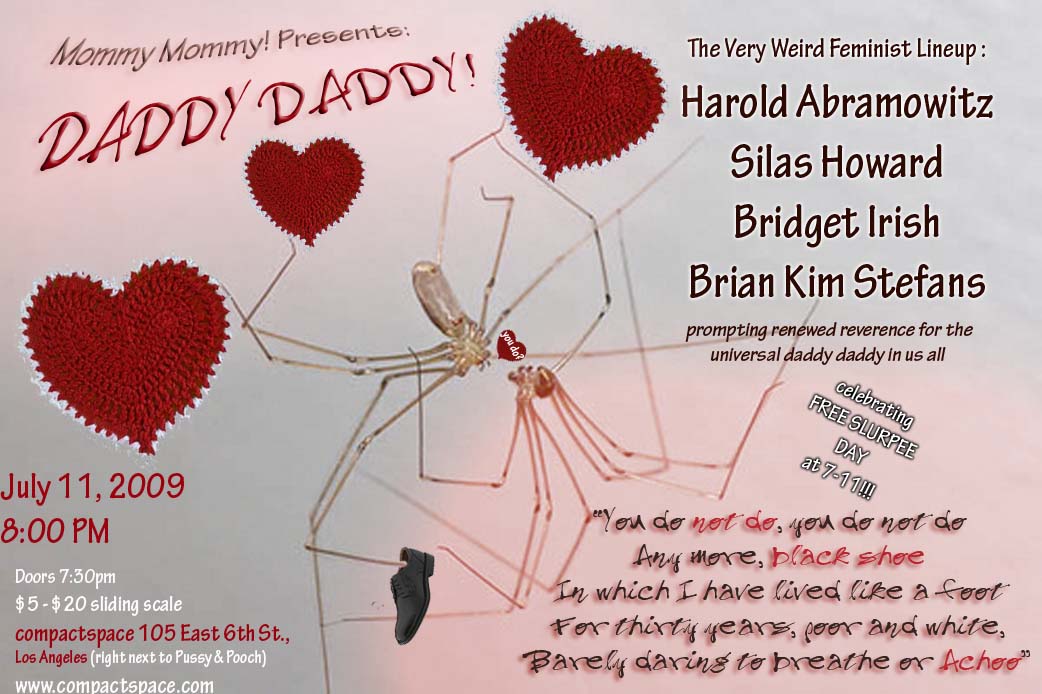
Janice invited you to “Mommy, Mommy! (#5): DADDY, DADDY!” on Saturday, July 11 at 7:30pm.

Event: Mommy, Mommy! (#5): DADDY, DADDY!
“Where Have All The Daddies Gone?”
What: Performance
Host: Teresa Carmody, Janice Lee, Anna Joy Springer
Start Time: Saturday, July 11 at 7:30pm
End Time: Saturday, July 11 at 10:30pm
Where: compactspace (www.compactspace.com)

Flyer for July MommyMommy.jpg

(click to enlarge)

There’s something quite perfect about this old bit from Psychic TV.

[On the second night of the Ups & Downs thing noted below, I’ll also be doing this…]

BRIAN KIM STEFANS, BRANDON DOWNING & STAN APPS

Saturday, June 6 2009 at 4pm

@ The Poetic Research Bureau
3702 San Fernando Blvd
Glendale, CA 91206

Doors open at 3:00pm
Reading starts at 4pm

$5 donation requested

Wine and snacks served before the reading

Brian Kim Stefans‘ recent books include Kluge: A Meditation, and other works (Roof, 2007), What is Said to the Poet Concerning Flowers (Factory School, 2006), and Before Starting Over: Essays and Interviews (Salt Publishing, 2007). His digital works such as “The Dreamlife of Letters” and “Star Wars, One Letter at a Time” have been shown in gallery settings worldwide; many of these can be found at his website, www.arras.net. He is an Assistant Professor of English at UCLA, specializing in poetry and electronic writing.

Brandon Downing is a videomaker, visual artist, and writer originally from the San Francisco Bay Area. His poetry collections include The Shirt Weapon (Germ, 2002), and Dark Brandon (Faux, 2005). An online gallery featuring his photographic work can be seen online at http://brandondowning.org. A feature-length DVD collection of recent video works, Dark Brandon // Eternal Classics, was released in 2007, and a monograph of his literary collages, Lake Antiquity, will be published by Fence Books this fall.

Stan Apps writes poems and essays. His books include: God’s Livestock Policy (Les Figues, 2008), Handbook of Poetic Language (eohippus labs, 2008), Grover Fuel (Scantily Clad e-book, 2009) and Info Ration (Make Now, 2007). A chapbook of Sonnets is forthcoming soon from Peachpit Press, and his essays will be collected as The World As Phone Bill (Combo Books) late this year. Stan’s poetry emphasizes direct statement, obviousness, economics, and the phatic nature of the self-explanatory.

The Ups & Downs
Scriptor 1.0 by Brian Kim Stefans

Friday June 5 & Saturday June 6 from 7-10 pm
with a short artist’s talk each night at 8pm
a General Project at workspace

Google Map

The Ups & Downs is an installation series. The show goes up, the show goes down. Opening party on Friday night and closing party the next night, on Saturday. No time for exhibitions. Low impact, ephemeral and immersive art. People with lots of People. The market. It’s a party. Time for the underground. It’s a ball. It’s for The People. This has been made for you. You look familiar? The show must go on. Installed and De-installed. Up. Down. Now what? Now then…

artist’s statement:
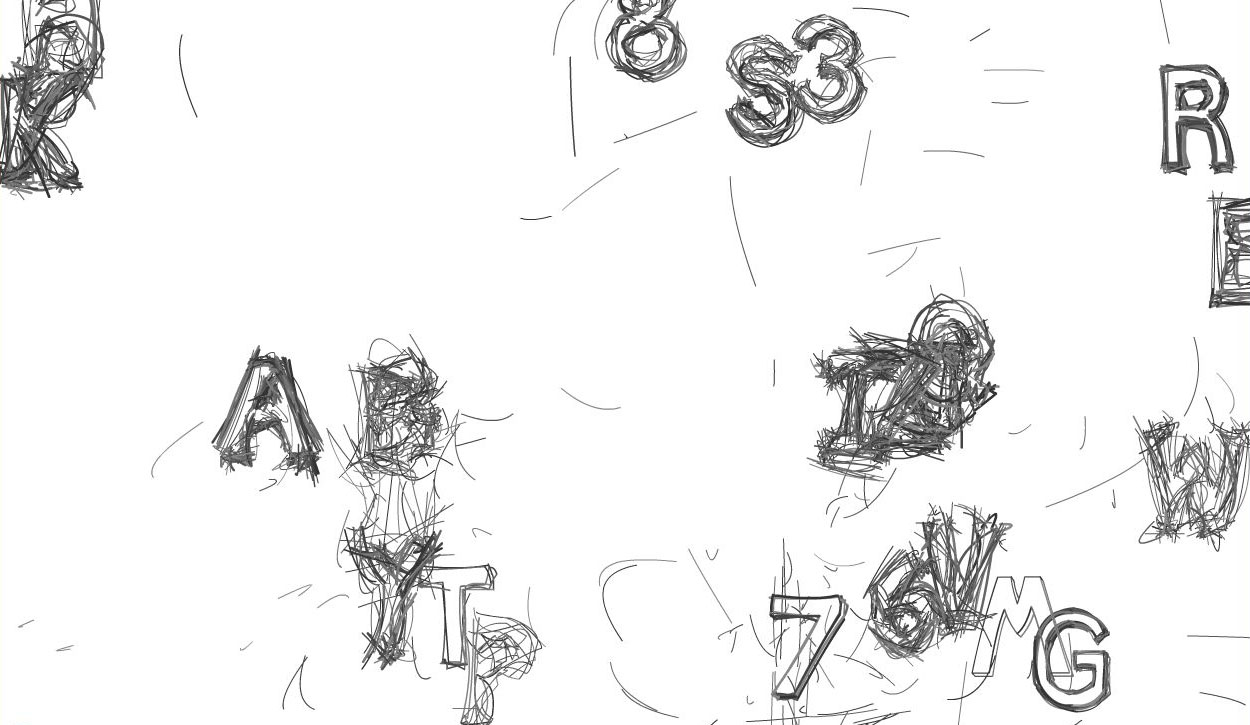
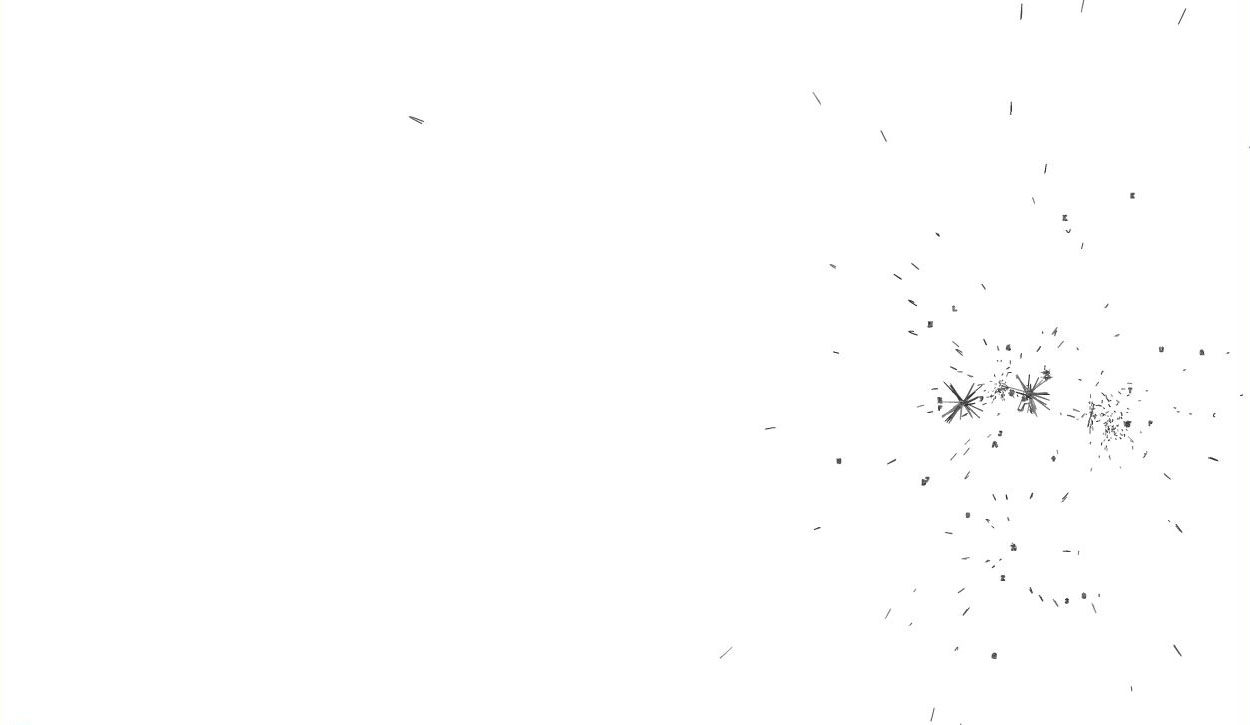
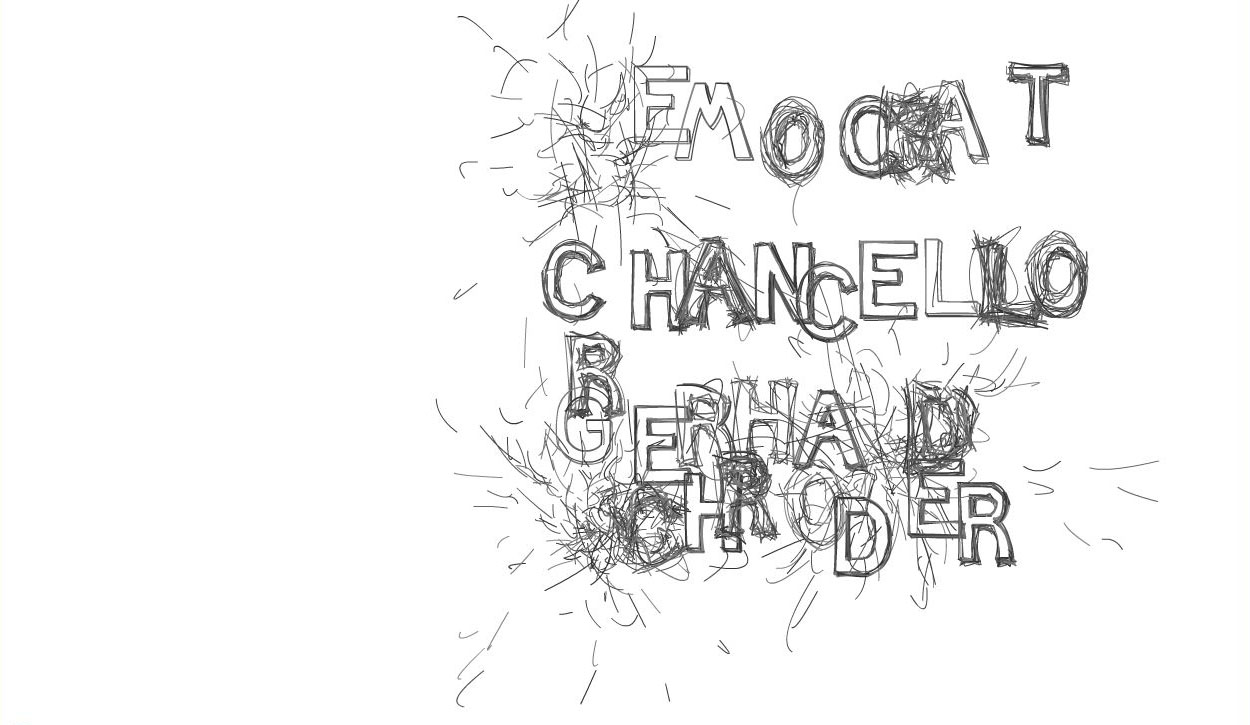
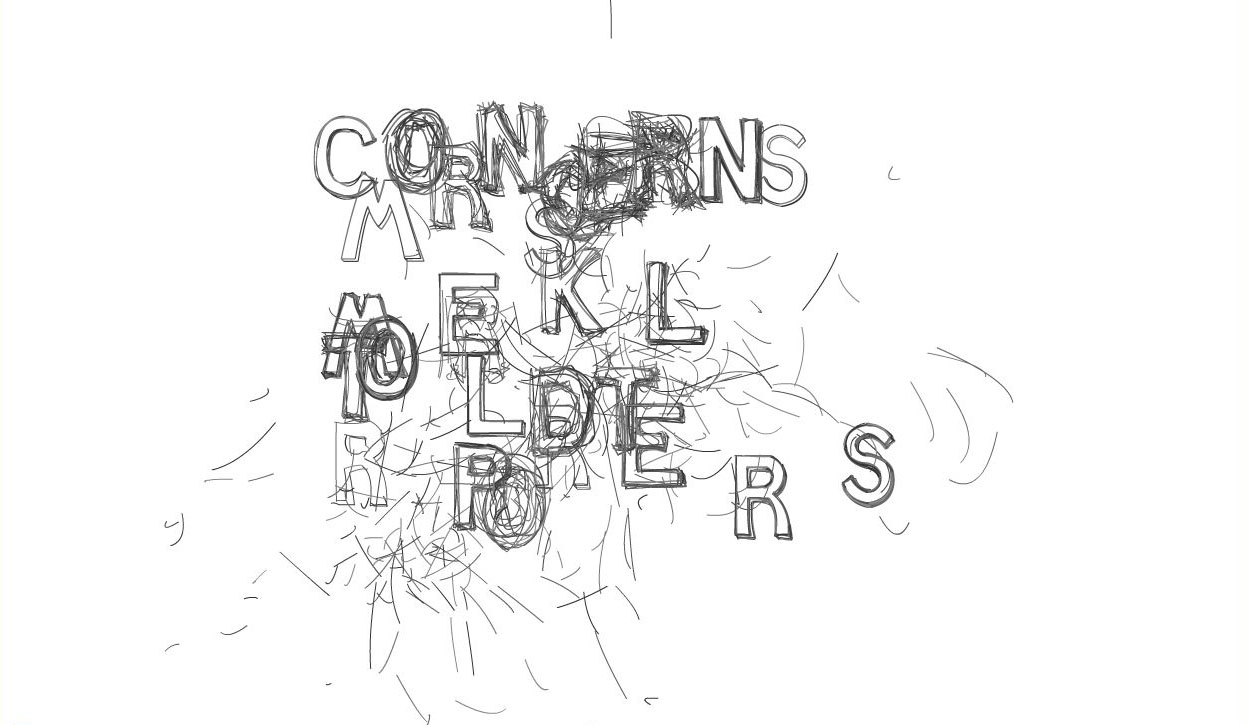
The Scriptor series is meant to bring free form doodling into the digital world. For the project, I created my own letterform creation program that, purposefully, lacks many of the elements of professional graphics programs such as Illustrator and Flash that encourage symmetry, cut-and-paste, and the mathematically precise placement of objects that we associate with digital design, not to mention much digital art. These letterforms and doodles are all “by hand,” and “by eye” – they are a version of penmanship for the screen, but one in which each line or stroke of the letterform can be animated algorithmically (something you can’t do with digital fonts). The words themselves are parsed from news articles – interesting phrases are randomly picked out, given randomly generated sizes, placements and trajectories, as well as a “crazy level” (that’s the name of the variable in the program) that determines their legibility. This “crazy level” can grow or shrink – once the “crazy level” reaches a certain pitch, the letter explodes, but in some instances letters can be brought back from the brink of disaster to reach a stable state again.

Scriptor teases the eye into a game of determining when a form is merely a scrawl and/or when it makes that invisible transition into an icon, a “letter” – or, inkblot-test style, into something else. These are not films – nothing you see on the screen will ever happen again (or, for that matter, ever happened).

Watch a version of Scriptor in action.

contact curator Mathew Timmons anathemata@sbcglobal.net for more information about this exhibition.

And here are more screencaps than you’ll ever need… click to view in higher res.

Scriptor 2.JPG

Scriptor 2.JPG

Scriptor 2.JPG

Scriptor 2.JPG

Scriptor 2.JPG

Scriptor 2.JPG

Scriptor 2.JPG

Scriptor 2.JPG

Scriptor 2.JPG

Scriptor 2.JPG

Scriptor 2.JPG

Scriptor 2.JPG

Sample footage of algorithmic poem/painting digital projection Scriptor, version 1, captured from the computer screen by CamStudio.

“The Scriptor series is meant to bring some of that free form doodling into the digital world. For the project, I created my own letterform creation program that, purposefully, lacks many of the elements of professional graphics programs such as Illustrator and Flash that encourage symmetry, cut-and-paste, and the mathematically precise placement of objects that we associate with digital design, not to mention much digital art. These letterforms and doodles are all by hand, and by eye — they are a version of penmanship for the screen, but one in which each line or stroke of the letterform can be animated algorithmically (something you can’t do with standard fonts). The words themselves are parsed from news articles interesting phrases are randomly picked out, given randomly generated sizes, placements and trajectories, as well as a crazy level (that’s the name of the variable in the program) that determines their legibility. This crazy level can grow or shrink — once the crazy level reaches a certain pitch, the letter explodes, but in some instances letters can be brought back from the brink of disaster to reach a stable state again.”

I realize I didn’t mention on this blog having three poems in the new issue of Fence. Well, not so new now — actually, I think nearly 5 months old. Includes new work by Jordan Davis, Shelley Jackson, Rae Armantrout, Alexander Kluge (after whom my book of that title is NOT named), Michael Harper, and a slew of others I’d never heard of or sort of heard of (or you haven’t heard of, or might have).

Anyway, they picked my poems for their website as well. But I’m really psyched about is having the big O on my cover, though he looks like he’s trapped in a corkboard (idea for a new R. Kelly series?).

cover.jpg

Please join us for a monthly lit reading in the company of art @Agitprop in North Park, co-sponsored by the gallery and local smallpresses 1913, Kuhl House, and Tougher Disguises.

This event is free and open to the public. There will be a receptionafter the reading. Donations to the gallery are greatly appreciated.

Poets Brian Kim Stefans & Geoffrey Dyer will read from their work on Saturday May 2 @ 7pm in the Agitprop Gallery in North Park:
2837 University Ave (entrance on Utah), San Diego, California, 92104,619.384.7989.

Brian Kim Stefans’ recent books include “Kluge” (Roof Books, 2007),“What is Said to the Poet Concerning Flowers” (Factory School, 2006)and “Before Starting Over: Selected Essays and Interviews” (SaltPublishing, 2006). Recent digital projects include the interactiveKluge (http://www.arras.net/kluge/) and a series of digitalprojections called “Scriptor” that are intended for gallery andenvironmental settings, one of which appeared in the show “Contranym” in New York City’s ABC Gallery in September, 2008. He is presentlyAssistant Professor of English and Digital Humanities at UCLA, editsthe online mag arras.net and writes the Free Space Comix blog; helives in Los Angeles half a block away from Scarlett Johansson (’sface on a billboard).

Geoffrey Dyer’s first book of poems, “The Dirty Halo of Everything,”was published by Krupskaya Press in 2003. Of Dyer’s work, John Yauwrites, “Welcome to the ‘valley of the near yonder hell, an Out Westsort of place,” where you will find “Golgotha embellished in cement”and the “mascara of Andromeda.” While you are here, “pay attention tothe words collaborating inside [y]our skull.” Geoffrey Dyer certainlydoes. So much so I swear that Apollinaire, William Eggleston, andHarry Dean Stanton have been slipping Dyer some potent Kickapoo Joy Juice. …This is America. And, like Eggleston and Stanton, Dyer is adamned wonderful guide.” An original member of the New Brutalistpoetry collective and a graduate of Mills College’s MFA Program, Dyerlives and blogs in the Bay Area.

covers_header_im.jpg

Inappropriate Covers: Opening and Artist Talk by Stephanie Syjuco
Friday, April 10
5:30pm
List Art Center Auditorium, David Winton Bell Gallery

http://www.brown.edu/Facilities/David_Winton_Bell_Gallery/future_frameset.html
The David Winton Bell Gallery at Brown University presents Inappropriate Covers, an exhibition of multimedia works by 11 established and emerging artists through Friday, May 29, 2009. Artists participating in the exhibition include Jim Campbell, Brian Dettmer, Kenneth Goldsmith, Kelly Heaton, Christian Marclay, L. Amelia Raley, Ted Riederer, Brian Kim Stefans, Stephanie Syjuco, John Oswald, and Mark Wallinger.

An opening will be held on Friday, April 10, with an artist talk by Stephanie Syjuco (http://stephaniesyjuco.com/) at 5:30 p.m. in the List Art Center Auditorium. Reception to follow. The gallery will be open from 5:30 to 7:30pm, during and after the talk.

STEPHANIE SYJUCO is a visual artist who’s recent work uses the tactics of bootlegging, reappropriation, and fictional fabrications to address issues of cultural biography, labor, and economic globalization. Working primarily in sculpture and installation, her objects mistranslate and misappropriate iconic symbols, creating frictions between high ideals and everyday materials. This has included re-creating several 1950s Modernist furniture pieces by French designer Charlotte Perriand but using cast-off material and rubbish in Beijing, China; starting a global collaborative project with crochet crafters to counterfeit high-end consumer goods; photographing models of Stonehenge made from cheap Asian imported food products; and searching for fragments of the Berlin Wall in her immediate surroundings in an attempt to revisit the historical moment of “the end of History.”

Got this from one of my students a few days ago. Just putting it here so I don’t forget.

I saw you were hot on the trail of Toadex Hobogrammathon and thought I might be able to help… is this the person you are seeking? I found this post on the internets at http://www.greenspun.com/bboard/q-and-a-fetch-msg.tcl?msg_id=0027vI. The email looks right, but there is another name attached to it. Here is the post:

827qk8: a pon a pon: 1974jsykisjudgiyj3dyk928usk8uw4lhhhhnx2n0167aaaapojc in098yj32yk4doi34ki4yujreyj3475y017sky07ybzvdcnevalksjt43589287ygpiuqw etjkhhcckvhqo7235y47y6i356hng8yj087i09384u5kri4y56r.

— Keith Sankas (dagmar_chili@hotmail.com), February 05, 2000.

I searched for Keith Sankas, trying to do this thing backwards, and this post is the only hit. There is another post that I found using the email here http://www.greenspun.com/bboard/q-and-a-fetch-msg.tcl?msg_id=001iZF.

I say the brain as is invented by scientists, we developed it to soupify so to speak the certain sensitivities of sensitives. And to outsmart the corporation underers, ers. So there are six rules for this type of behavior: 1. scan low and high for microelectron dot multiplication matrices, 2. leave the sorting and parsing and spacing and Farsi pantechnicon macrophageousicicity to personal data handlers, and 3. talk to a second cop about traffic stops. These summarize Bucky Fuller’s thoughts on this topic, also those of Miriam Edelstein and the oo-oomlaut gruppe.

— Telex Codagrammathon (dagmar_chili@hotmail.com), November 14, 1999

« Previous PageNext Page »